



ISO/IEC 17025 accreditation is how a photovoltaic laboratory proves that its results are technically competent, impartial and traceable. Certification bodies, module buyers, insurers and banks rely on it, and for a calibration or test lab it is often the difference between a number that settles a contract and one that starts a dispute.
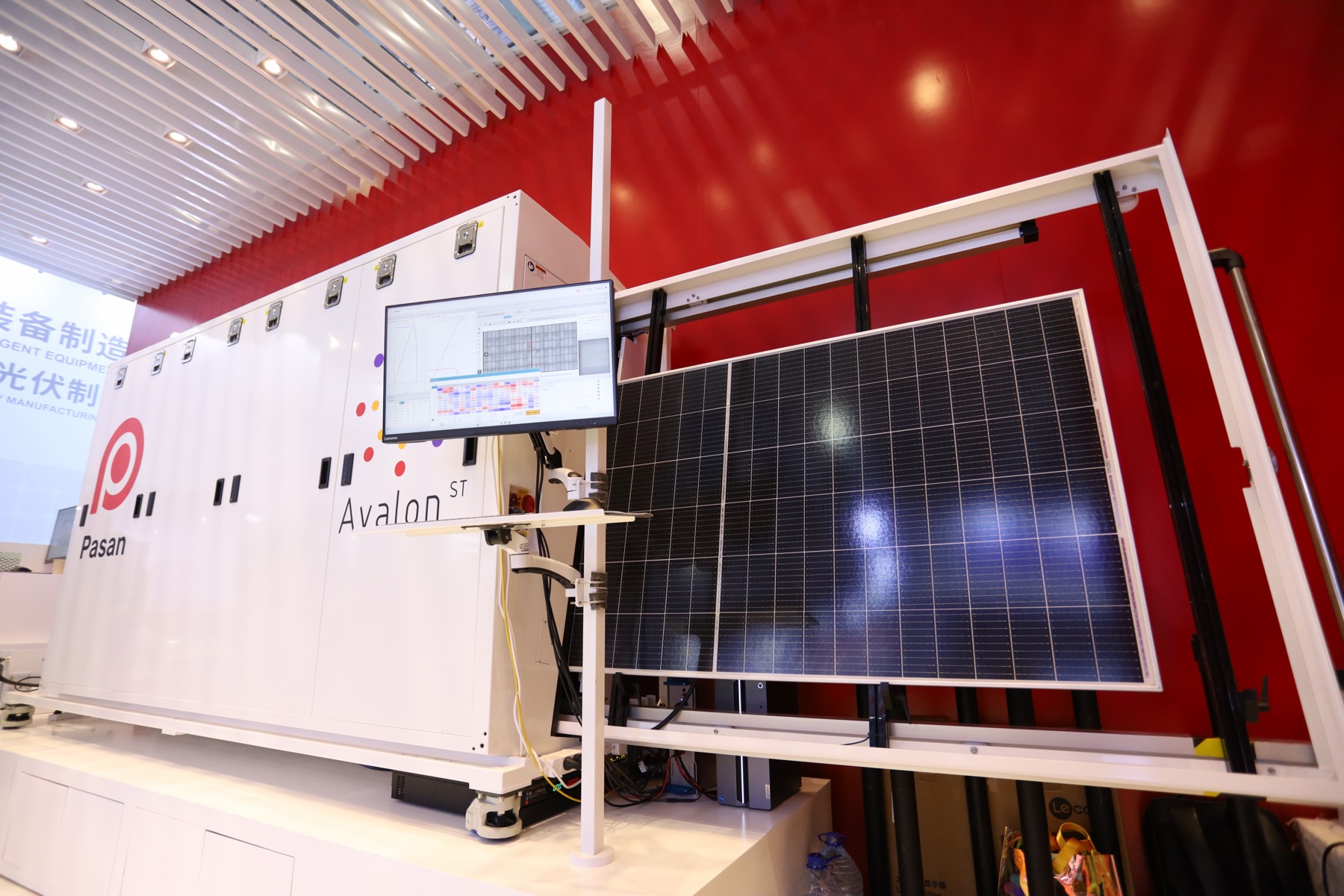
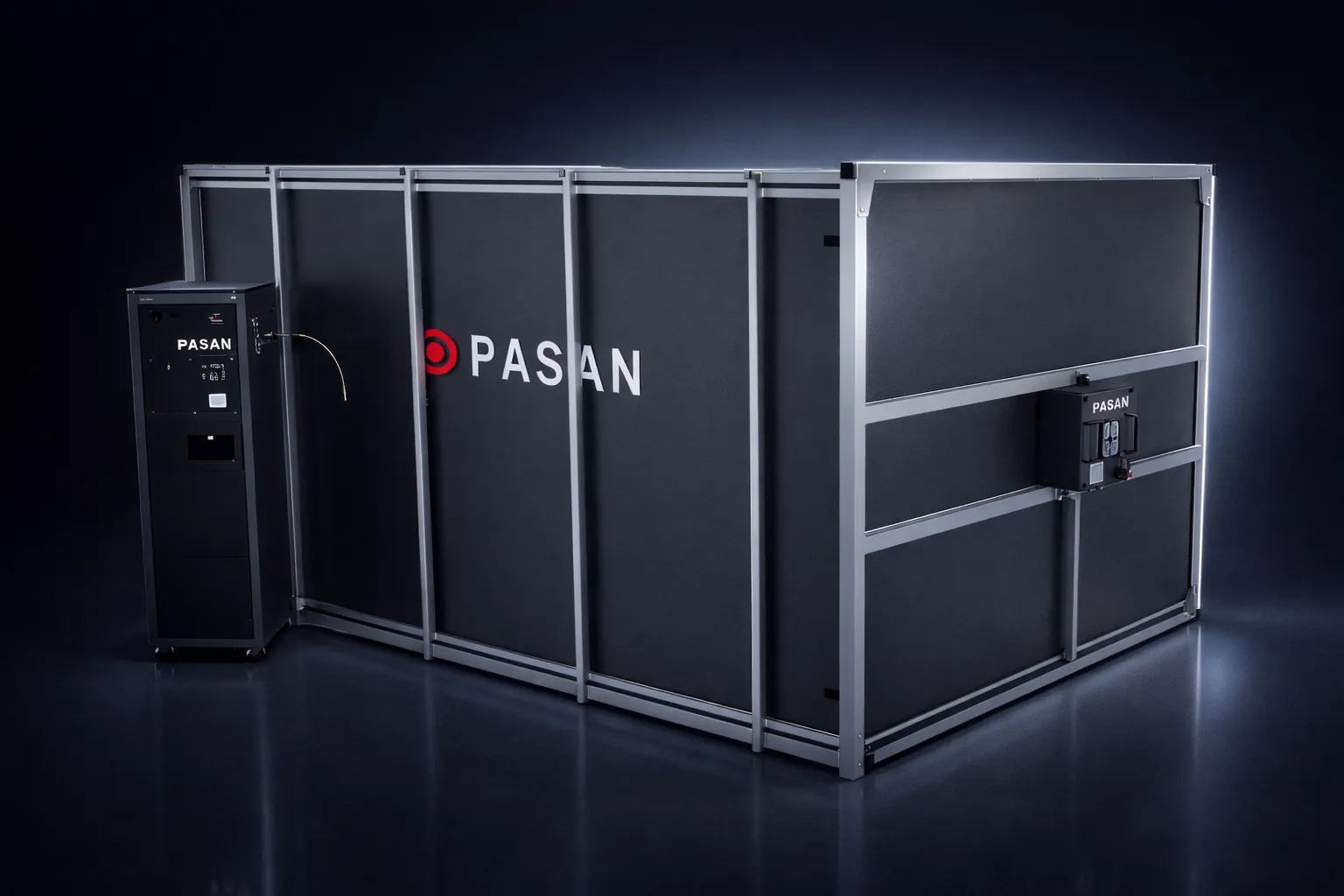
Pasan and Avalon ST systems are used by many accredited laboratories. Laboratories and certifiers that rely on Pasan systems include Fraunhofer ISE, PI Berlin, TÜV Rheinland, UL, DEKRA, KTL, RETC, PVEL, the EU Joint Research Centre (JRC), NIM and SUPSI, and Pasan’s reference simulators serve as the reference for more than 100 laboratories worldwide. This guide distils what we see in those labs: what the assessors check, and how to get through it.
What accreditation actually assesses
ISO/IEC 17025:2017 has two halves. The management requirements cover impartiality, confidentiality, document control, records, complaints, nonconforming work, internal audits and management review. The technical requirements cover personnel competence, facilities and environmental conditions, equipment, metrological traceability, method selection and validation, measurement uncertainty, assuring the validity of results, and reporting. For a PV lab the technical half is where accreditations are won or lost.
Nine steps to accreditation
1. Define the scope precisely
State exactly what you will measure and to which standards: typically Pmax, Isc, Voc and fill factor at STC per IEC 60904-1, with reference devices per IEC 60904-2, spectral mismatch correction per IEC 60904-7, linearity per IEC 60904-10 and translation per IEC 60891, for defined module sizes and technologies. A scope wider than what you have validated is the fastest way to a finding.
2. Build an unbroken traceability chain
Every quantity that affects the result needs calibration traceable to the SI: the reference cell or module (calibrated by an accredited laboratory or a national metrology institute), the amplifier that reads it, the voltage and current channels of the electronic load, the temperature sensors and the spectroradiometer. Each needs a justified calibration interval. Make sure every one of them can actually be calibrated externally; see ISO/IEC 17025 and your solar simulator.
3. Characterise the simulator
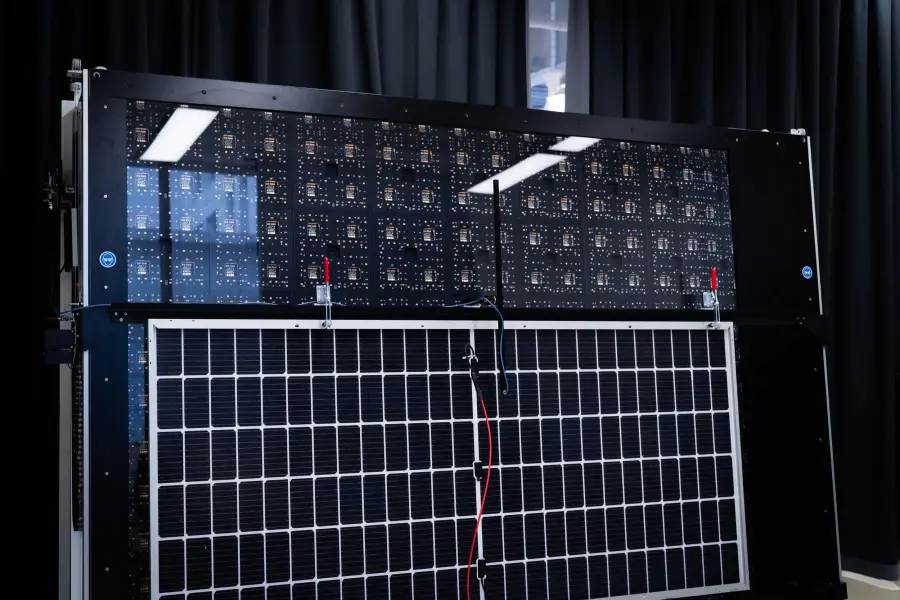
Classify the simulator to IEC 60904-9, preferably edition 3 (300 to 1200 nm, with SPC and SPD), map its spatial non-uniformity over the test area and measure its temporal stability. Repeat the characterisation at defined intervals and after any maintenance. See IEC 60904-9 edition 3.
4. Validate the method
Show that the method works for the devices in your scope. For capacitive TOPCon and HJT modules that means demonstrating that the pulse is long enough and that forward and reverse sweeps agree. Run repeatability and reproducibility studies and compare against reference values.
5. Write the uncertainty budget
Build a budget following the GUM (JCGM 100) that covers every contribution: reference calibration, spectral mismatch, non-uniformity, temporal instability, temperature, electrical measurement, repeatability and the method itself. Report the expanded uncertainty with its coverage factor (k = 2). See how to read a solar simulator uncertainty budget.
6. Assure the validity of results
Assessors want evidence that results stay valid between calibrations: control modules measured on a routine basis with control charts, intermediate checks of spectrum and uniformity, and participation in interlaboratory comparisons or proficiency tests.
7. Keep competence and records airtight
Document the training and authorisation of every operator. Keep raw data with the calibration state of the equipment and the environmental conditions at the time of measurement, so any reported value can be reconstructed. Reports must state results with their uncertainty and the traceability of the measurement.
8. Run the management system
Hold at least one full internal audit and one management review before you apply, and close the findings. Assessors will look for evidence that the system is used, not just written.
9. Go through the assessment
Apply to your national accreditation body (for example SAS in Switzerland, DAkkS in Germany, UKAS in the UK, A2LA in the USA or CNAS in China). Expect a document review, an on-site assessment in which assessors witness measurements, a list of nonconformities to close with corrective actions, and then the accreditation decision. Surveillance visits and periodic reassessment follow.
The findings that hold labs back most often
- Equipment that cannot be calibrated externally, most often the electronic load of the simulator.
- Uncertainty budgets that leave out contributions, typically spectral mismatch, non-uniformity or the method for capacitive devices.
- No intermediate checks between calibrations, or calibration intervals that are not justified.
- Reference devices used past their calibration due date.
- Records that do not allow a reported result to be reconstructed.
- A scope wider than the methods that were actually validated.
How Pasan and Avalon systems support accreditation
- Measurement chains traceable to METAS, the Swiss federal metrology institute, under ISO/IEC 17025.
- The [WPVS transimpedance amplifier](/systems/products/wpvs-tia), reading non-shunted WPVS reference cells with ±0.1% accuracy.
- Measurement electronics designed and built in-house, documented and calibratable; see [why vertical integration matters](/systems/guides/in-house-design-and-manufacturing).
- Factory acceptance tests and on-site classification, documented end to end.
- Long-pulse methods (40 to 100 ms plateau, DragonBack®) validated for capacitive modules.
- The [Spectral Response Kit](/systems/products/spectral-kit) for intermediate spectral checks on the real measurement flash.
- PVStudio and Pasan Cloud, keeping every measurement tied to its module serial and machine.
- Recalibration and support from Neuchâtel and the worldwide service network.
Preparing for accreditation, or extending a scope to TOPCon, HJT or new module formats? Talk to our metrology team: we have helped laboratories through it for decades.