


A satellite’s power budget is decided on the ground. Every lot of space solar cells is measured under a simulated AM0 sun before it is laid down on an array, and that number decides how much power the spacecraft will have in orbit, for its whole mission. There is no field correction afterwards.
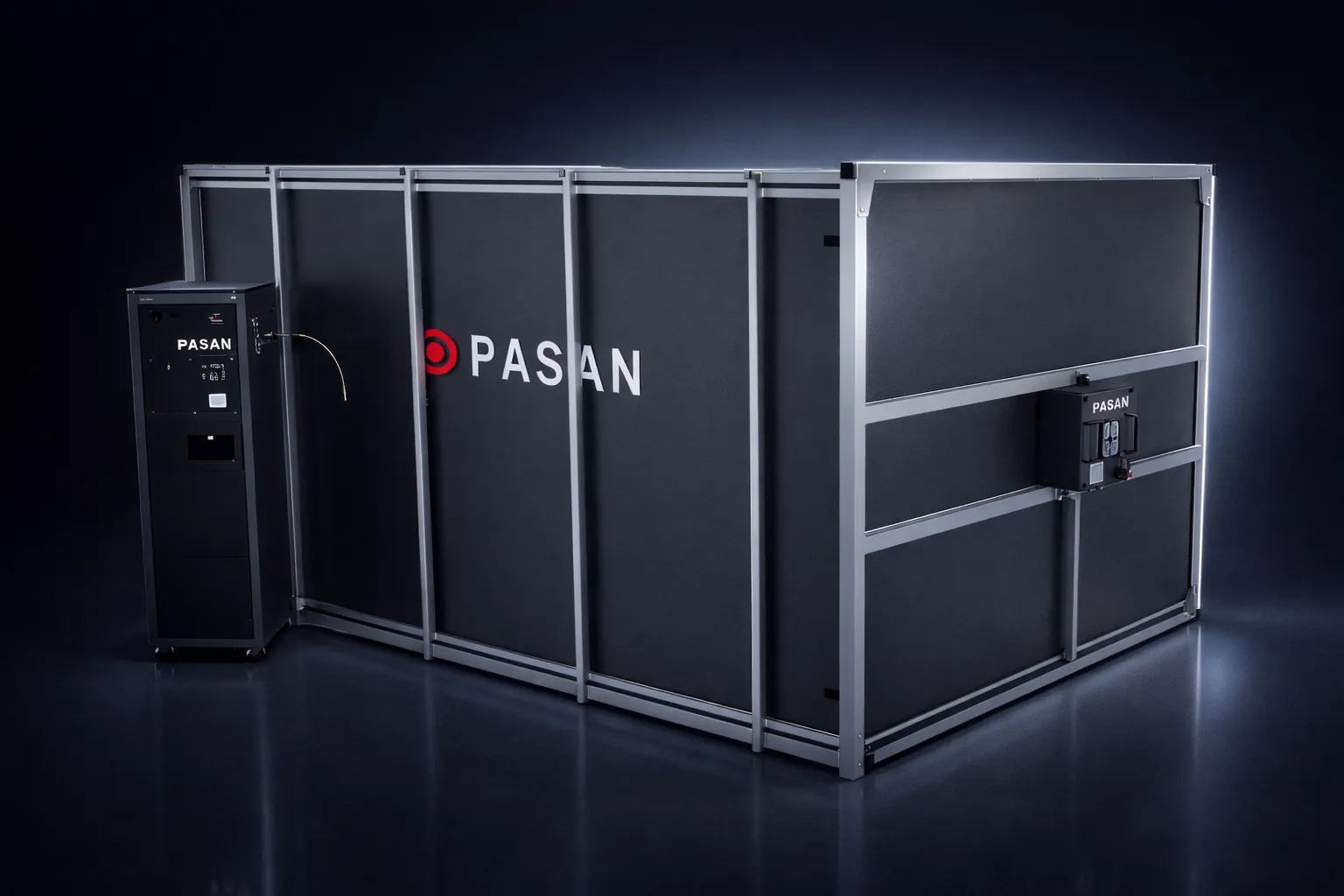
Since 2008 Pasan has been the reference for that measurement. The HighLIGHT space line was developed jointly with ESA and Thales, and Pasan systems are used by most space agencies and by large private space companies. When multi-junction results from different programmes are compared, they are compared against measurements made on Pasan systems.
Why space measurement is different
- A different sun: above the atmosphere there is no air-mass filtering. The AM0 spectrum is bluer and stronger than terrestrial AM1.5G, at about 1367 W/m², and the simulator has to reproduce it across the whole response range of the cell.
- Stacked junctions: space cells are multi-junction devices (typically GaInP/GaAs/Ge and beyond, 3J to 5J). Each junction absorbs its own band, and because the junctions are in series, the weakest one limits the current of the whole cell.
- Per-junction balancing: an accurate measurement sets the light in every junction’s band to its AM0 level, checked with component reference cells, so that the limiting junction is the one it would be in orbit, not an artefact of the lamp.
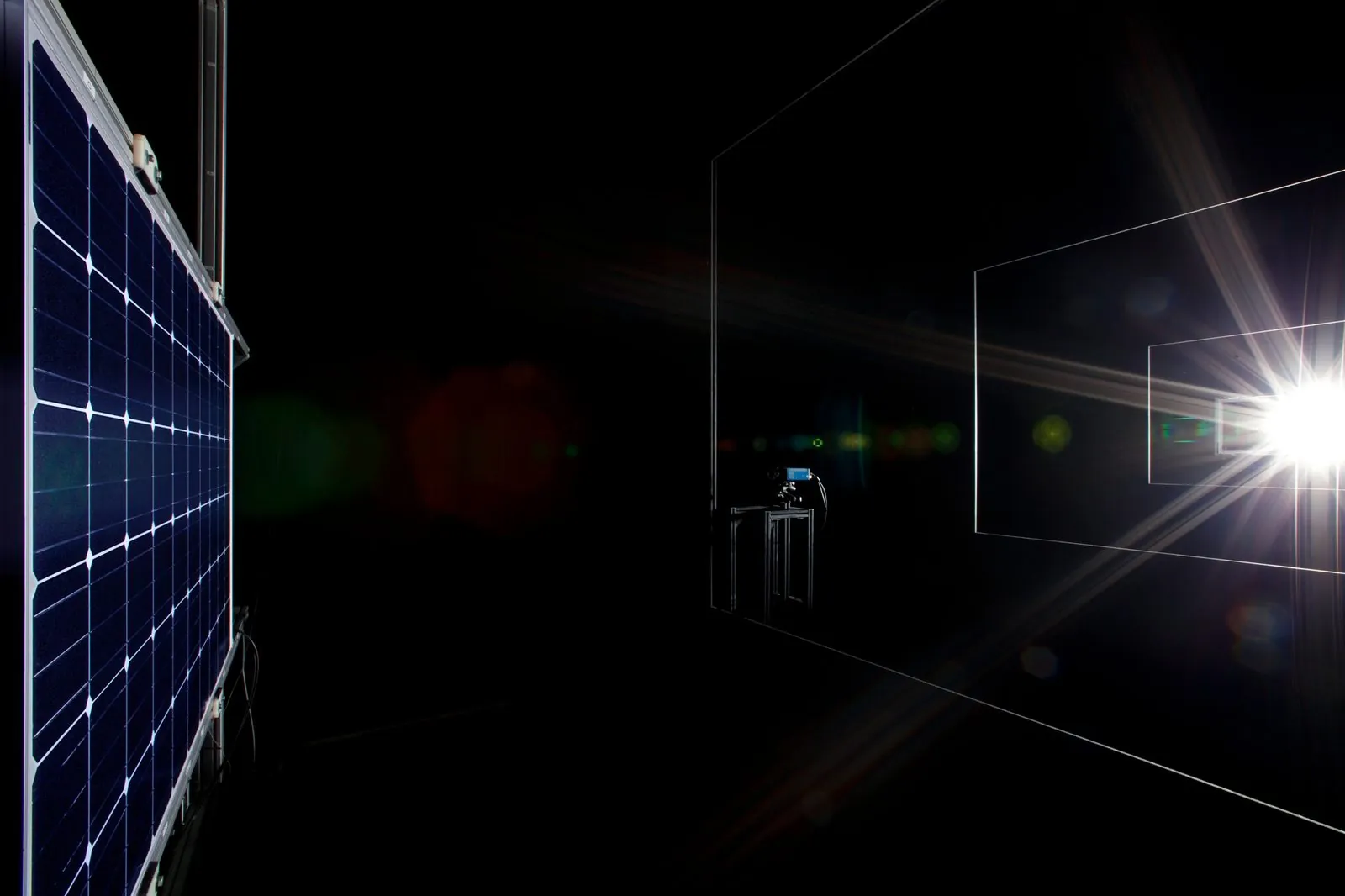
- Directional light: in orbit sunlight arrives as a near-parallel beam from a single point. A xenon arc is effectively a point source, so its low-divergence beam tracks how cover glass and anti-reflective coatings behave in space.
Why comparability matters most
Space programmes exchange cell and panel data between cell makers, array integrators, primes and agencies, across lots and across years. A measurement is only useful if it can be compared with theirs. That is the real reason Pasan has become the reference: when agencies and their primes measure on Pasan systems, the most direct way to make your results comparable with theirs is to measure on the same platform, with the same method and the same calibration chain.
The Pasan space line
- [HighLIGHT AM0](/systems/products/highlight-am0): the AM0 spectrum (about 1367 W/m²) for single- and multi-junction space cells, with full I-V characterisation (Jsc, Voc, fill factor, efficiency) traceable to SI through space reference cells.
- [HighLIGHT SAT](/systems/products/highlight-sat): the large-area AM0 platform for 3J, 4J and 5J devices, with per-junction spectral tuning, from a single cell to a complete satellite panel.
- The [WPVS transimpedance amplifier](/systems/products/wpvs-tia) and the METAS-traceable calibration chain shared by every Pasan system.
When an LED system is the better fit
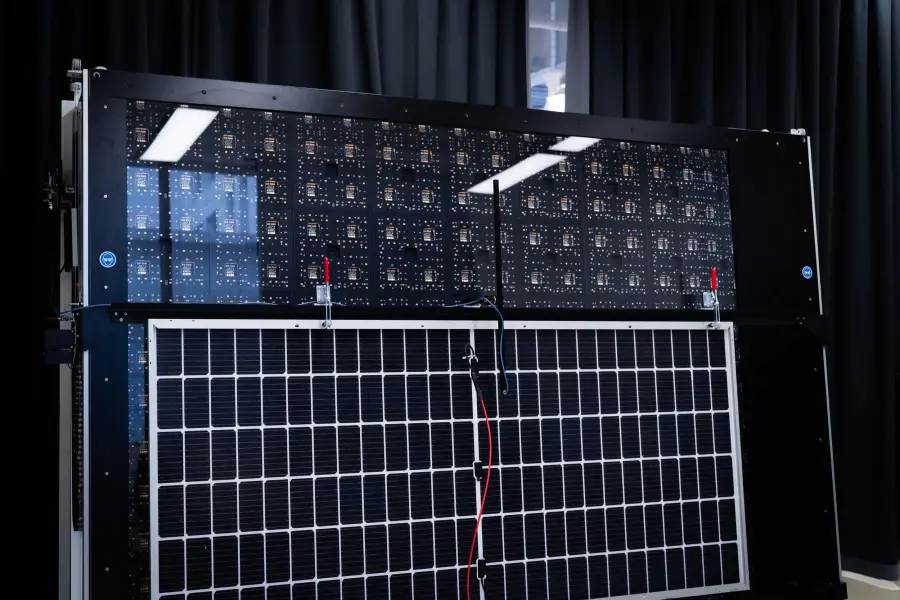
Not every space lab needs the reference platform. Pasan’s sister company Avalon ST builds a lower-cost LED route. The Nexun Cosmo pairs Avalon’s LED engine with a patented tungsten-halogen fill that reaches deep into the infrared, where the bottom junctions of multi-junction cells respond. That gives it a tunable 300 to 1900 nm spectrum for 3J and 4J characterisation on a lab bench, with lunar, Martian and custom spectra on demand. For crystalline silicon space cells, AM0 is also possible with a standard Nexun LED simulator.
How to choose
- Your results must be comparable with those of space agencies and their primes, you test full panels, or you qualify 5J devices: Pasan HighLIGHT SAT and HighLIGHT AM0.
- You develop 3J or 4J cells in R&D, need custom mission spectra, and want a benchtop system at lower cost: Avalon Nexun Cosmo.
- You measure crystalline silicon space cells under AM0: a standard Avalon Nexun LED simulator.
Whichever route fits, both run on one calibration chain, so measurements on a Nexun Cosmo can be correlated with the Pasan reference. Talk to our space team about your cells, your spectra and your programme.