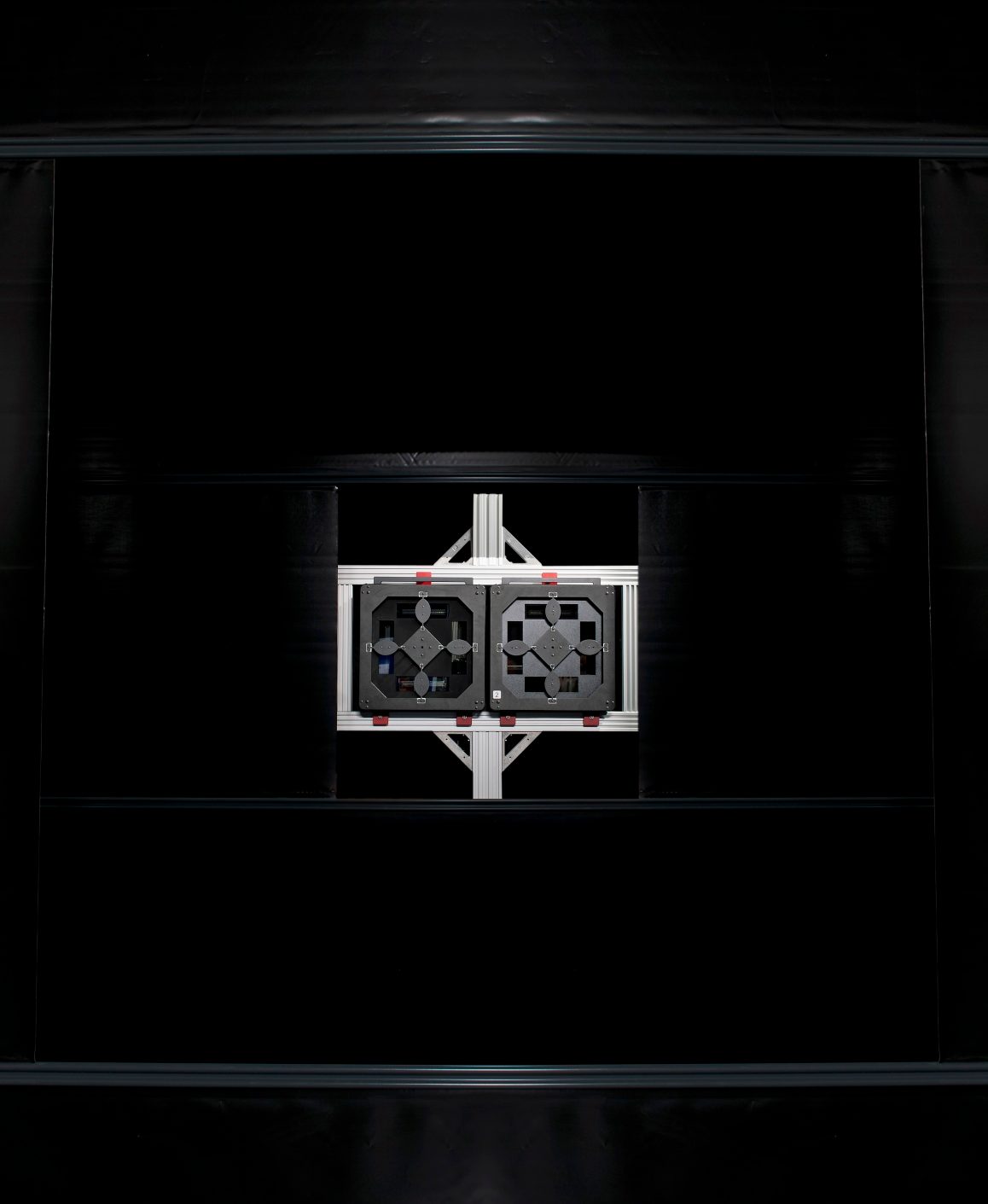
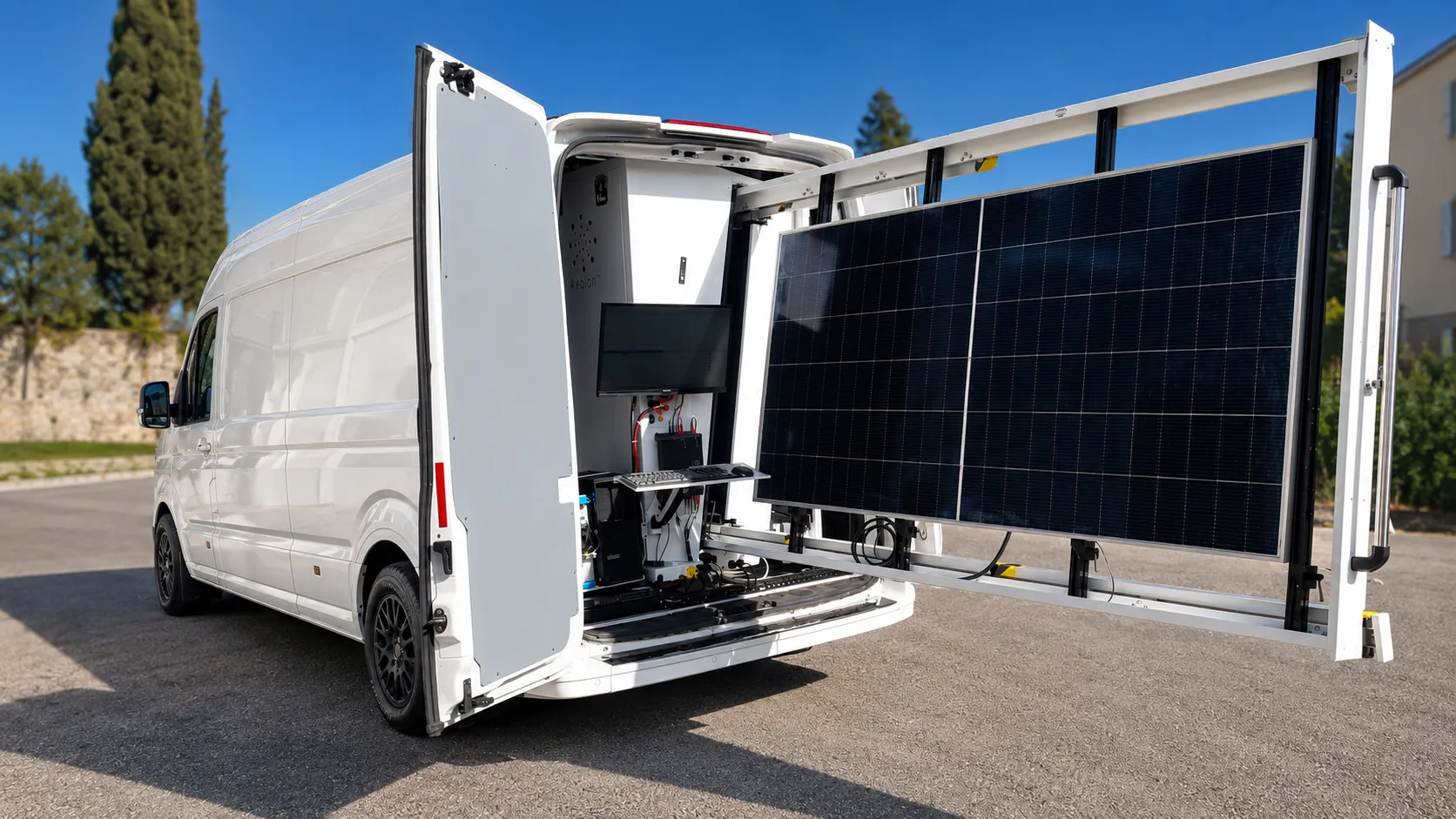
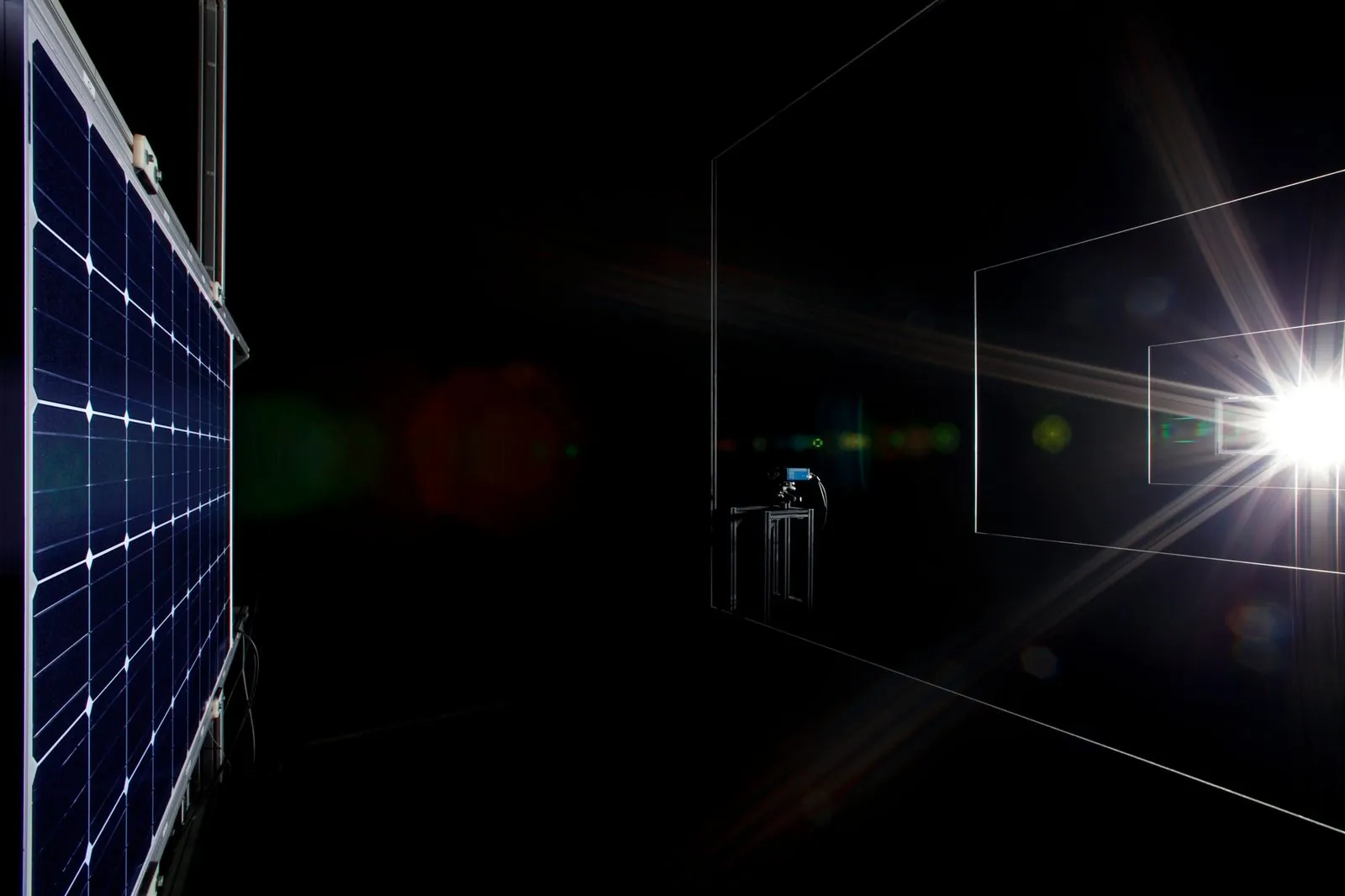


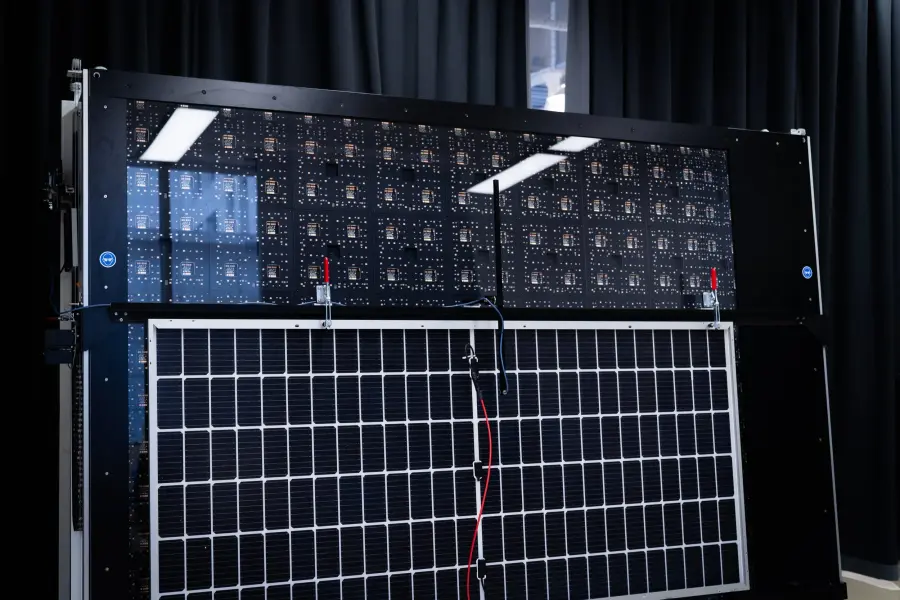
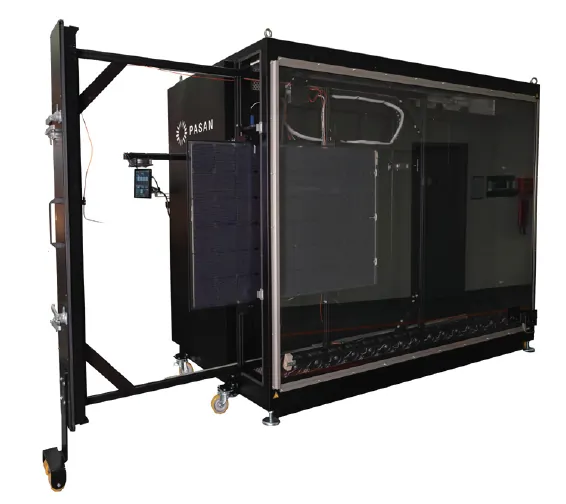
A module's power rating is a contract. When a buyer agrees to purchase a gigawatt of modules at a stated wattage, a fraction of a percent of measurement error is real money on both sides. The spectral class of the simulator that produced that number is one of the levers that decides how tight the contract can be.
What the three letters mean
IEC 60904-9 grades a solar simulator on three axes: spectral match to AM1.5G, spatial non-uniformity of irradiance, and temporal stability. Each axis is graded A+, A, B or C. A+A+A+ is the top class on all three. A++ is a tighter spectral grade introduced for the most demanding reference work.
Spectral match
Spectral match measures how closely the lamp's spectrum follows the standard reference spectrum, band by band. A poor match means the calibration cannot fully cancel the spectral mismatch between your reference device and the module under test, and that residual lands straight in the uncertainty budget.
Spatial uniformity
Uniformity is how evenly the light falls across the test plane. On a large module, a few percent of non-uniformity biases the result depending on where the cells sit. A+ uniformity over a full large-format module is harder than it sounds, and it is where bench geometry and optics earn their keep.
Temporal stability
Temporal stability is how steady the irradiance stays during the measurement window. For capacitive modules that need a long pulse, stability across the whole pulse, not just at one instant, is what keeps forward and reverse sweeps in agreement.
Why the tenth of a percent matters
Lowering measurement uncertainty is the whole point of a reference-grade simulator. At gigawatt scale, a tenth of a percent of uncertainty is the difference between a comfortable margin and a dispute. The class on the spec sheet is shorthand for how much of that margin the instrument hands back to you.