


 Electroluminescence Imaging
Calibration · WPVS · ISO
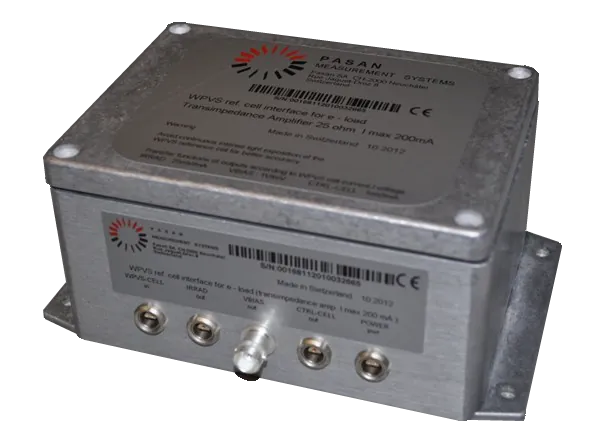
WPVS Transimpedance Amplifier
This is the small box that lets a lab pass ISO certification. The WPVS transimpedance amplifier converts the photocurrent of a non-shunted WPVS reference cell into a precise voltage with ±0.1% uncertainty, removing the shunt-resistance drift that otherwise corrupts the calibration chain, and giving every Pasan simulator unbroken traceability back to METAS and the SI.
Swiss made and calibrated.
- ±0.1%
- Transimpedance accuracy (25 °C)
- WPVS
- Non-shunted reference cells
- METAS
- SI-traceable
- ISO
- 17025 calibration chain
Get a specification and quote for WPVS Transimpedance Amplifier
Tell us your devices and standards. An application engineer replies with a configuration and an uncertainty budget.
Calibration without shunt drift.
WPVS, World Photovoltaic Scale, reference cells are the non-shunted standard maintained by national metrology institutes. Dropping the parallel shunt resistor removes its temperature-dependent drift and non-linearity, the hidden source of uncertainty in older reference designs. They are how irradiance is traced to SI units.
- ▸StandardWPVS (non-shunted)
- ▸Removesshunt drift & non-linearity
- ▸Maintained bymetrology institutes
- ▸PerIEC 60904-3 reference cells
An unbroken chain to the SI.
The TIA converts a WPVS cell's photocurrent into a clean, lab-grade voltage that any electronic load or DAQ can read, so an ISO/IEC 17025 lab calibrates every simulator (HighLIGHT, A++ Reference, AM0) against the same reference, with no re-shunting and no systematic uncertainty from reference-cell ageing.
- ▸Outputprecision voltage, ±0.1%
- ▸ConnectorLEMO
- ▸EnablesISO/IEC 17025 calibration
- ▸AcrossHighLIGHT · A++ · AM0
Solar simulators, explained.
- Why a vertically integrated solar simulator maker mattersWho designs the electronics, who builds the boards and who owns the firmware decides what a solar simulator costs, how well it measures and whether it can still be serviced in fifteen years.Read guide
- ISO/IEC 17025 and your solar simulator: can every part be calibrated?An accredited I-V measurement is only as traceable as its least calibratable part. What ISO/IEC 17025 expects of a solar simulator, and the questions to ask before you buy one.Read guide
- How to check that a calibration or test certificate is genuineA certificate is only worth what it can prove. The checks that separate a genuine accredited calibration or product certificate from a document that only looks like one.Read guide
- Why A++ matters for reference PV module measurementWhen a power rating has to hold up against a certification body or a gigawatt supply contract, the class of the simulator behind it is part of the evidence. Here is why A++ changes the number.Read guide
- Solar simulator uncertainty budget: what actually mattersThe class label is a summary; the uncertainty budget is the evidence. Here are the lines that dominate a solar simulator's budget, and how to read one before you buy.Read guide
Complete the measurement chain.
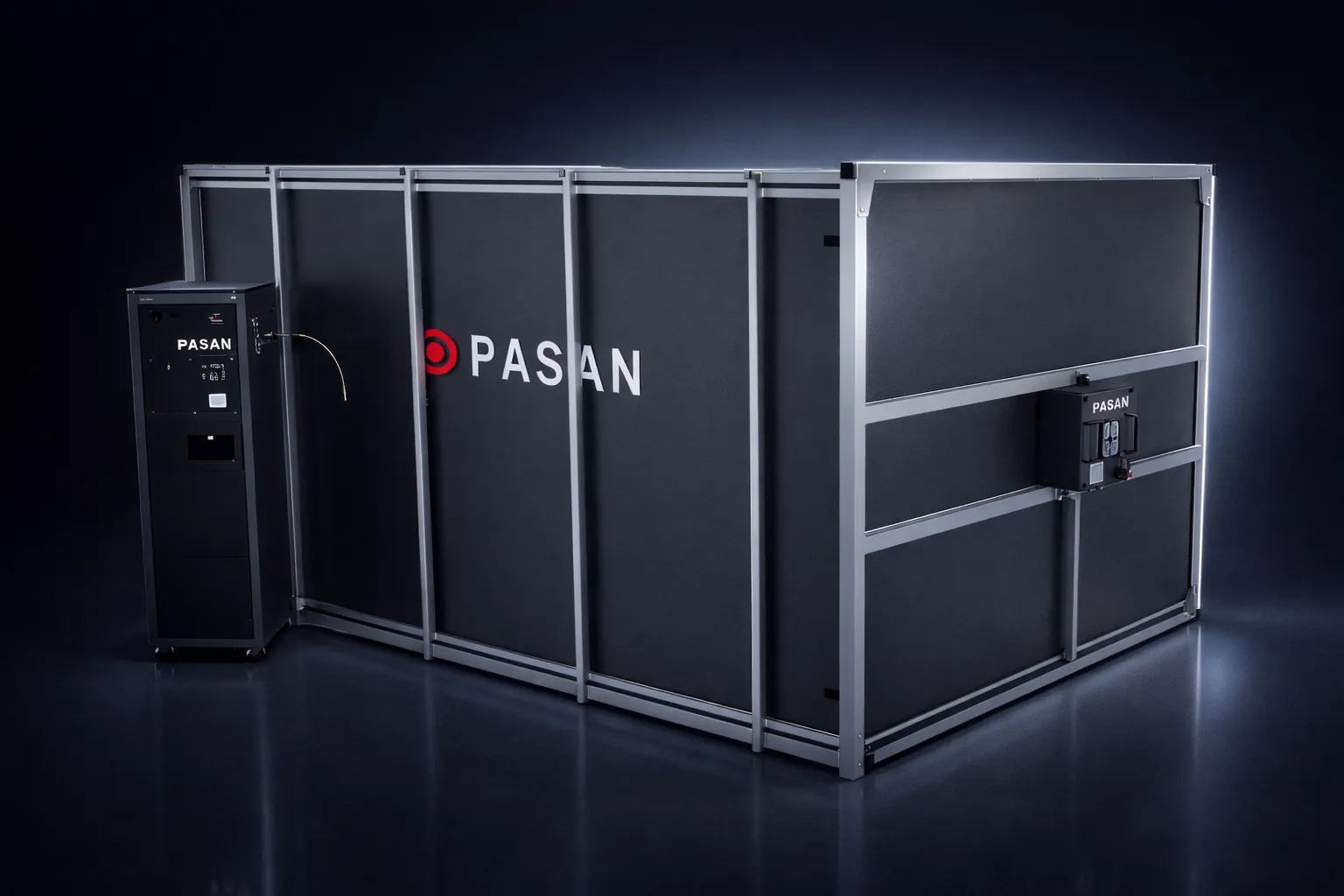
The industry's reference xenon solar simulator since 2008, A++A++A++ to IEC 60904-9, lowest measurement uncertainty, Swiss-made and METAS-traceable.
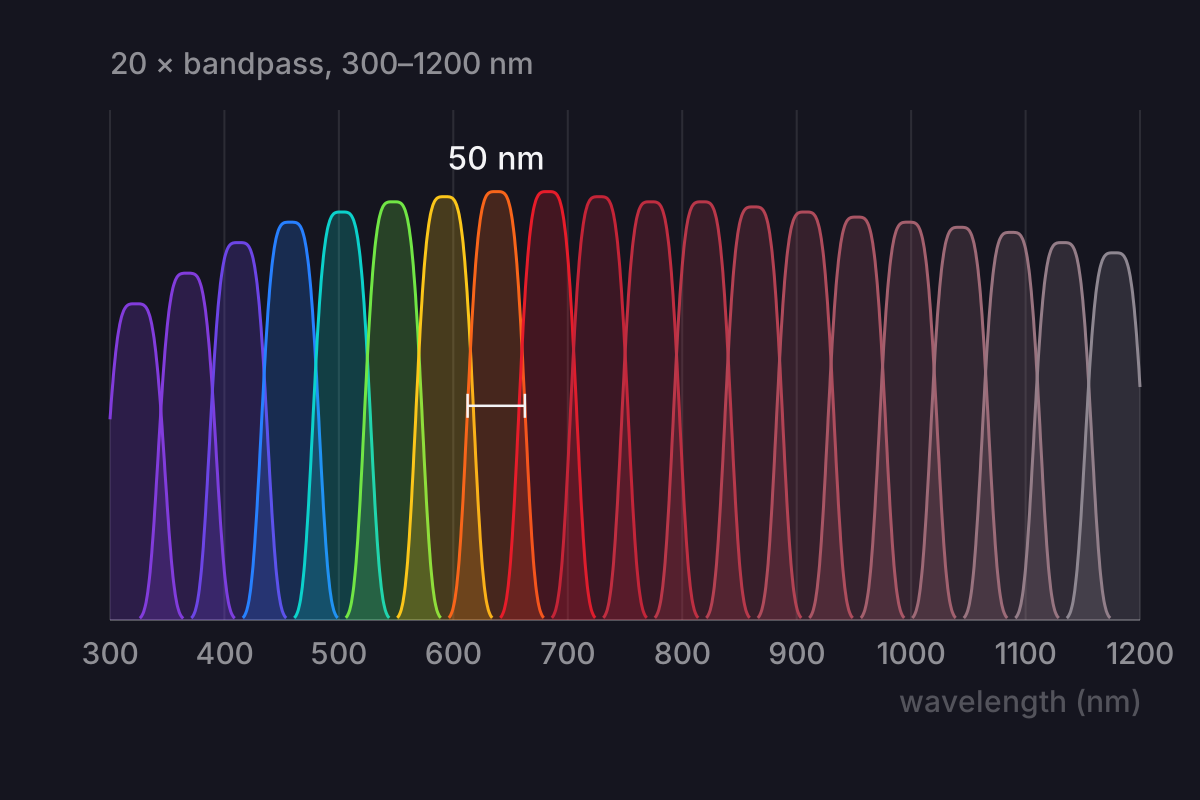
Measures the spectral response of your cells and modules with about 20 bandpass filters under the real flash, and grades the simulator spectrum to IEC 60904-9 ed.3 with a two-channel spectroradiometer.
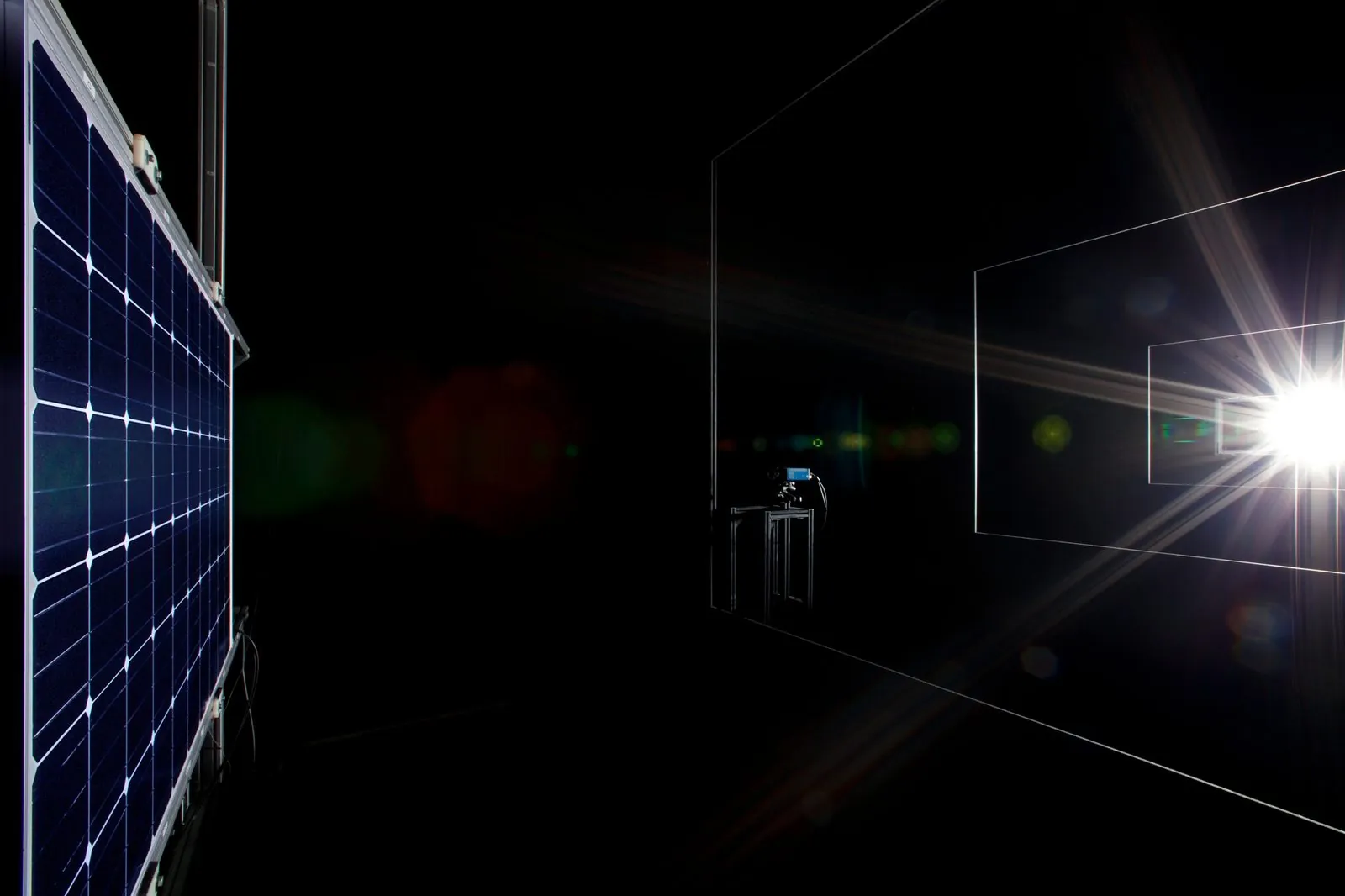
Long-pulse xenon solar simulator for calibration laboratories, A+A+A+ to IEC 60904-9, measures the most capacitive modules without hysteresis.