

 Electroluminescence Imaging
Module · the reference
HighLIGHT A++ Reference
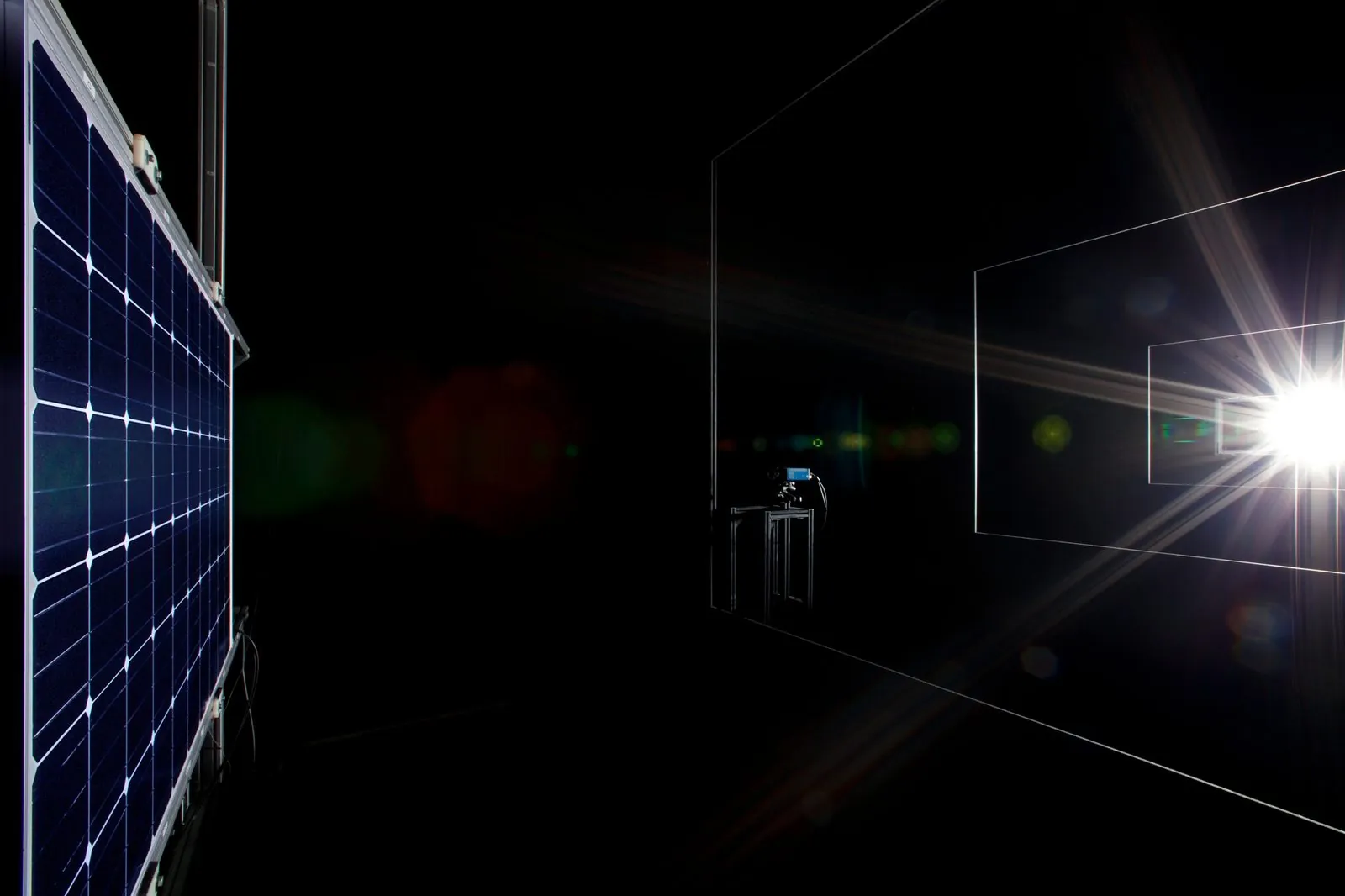
The HighLIGHT A++ Reference is the xenon solar simulator the PV industry calibrates against. Since 2008, tier-1 laboratories worldwide have used it to define what accurate means for a solar module: A++A++A++ under IEC 60904-9, twice as good as Class A, traceable to METAS (the Swiss federal metrology institute) under ISO/IEC 17025. Designed, built and calibrated in Switzerland, it is delivered worldwide with no export-licence exposure.
Swiss made and calibrated.
- 2008
- The reference since
- A++
- ×3, twice better than A
- <0.5%
- Non-uniformity (A++)
- METAS
- ISO/IEC 17025 traceability
Get a specification and quote for HighLIGHT A++ Reference
Tell us your devices and standards. An application engineer replies with a configuration and an uncertainty budget.
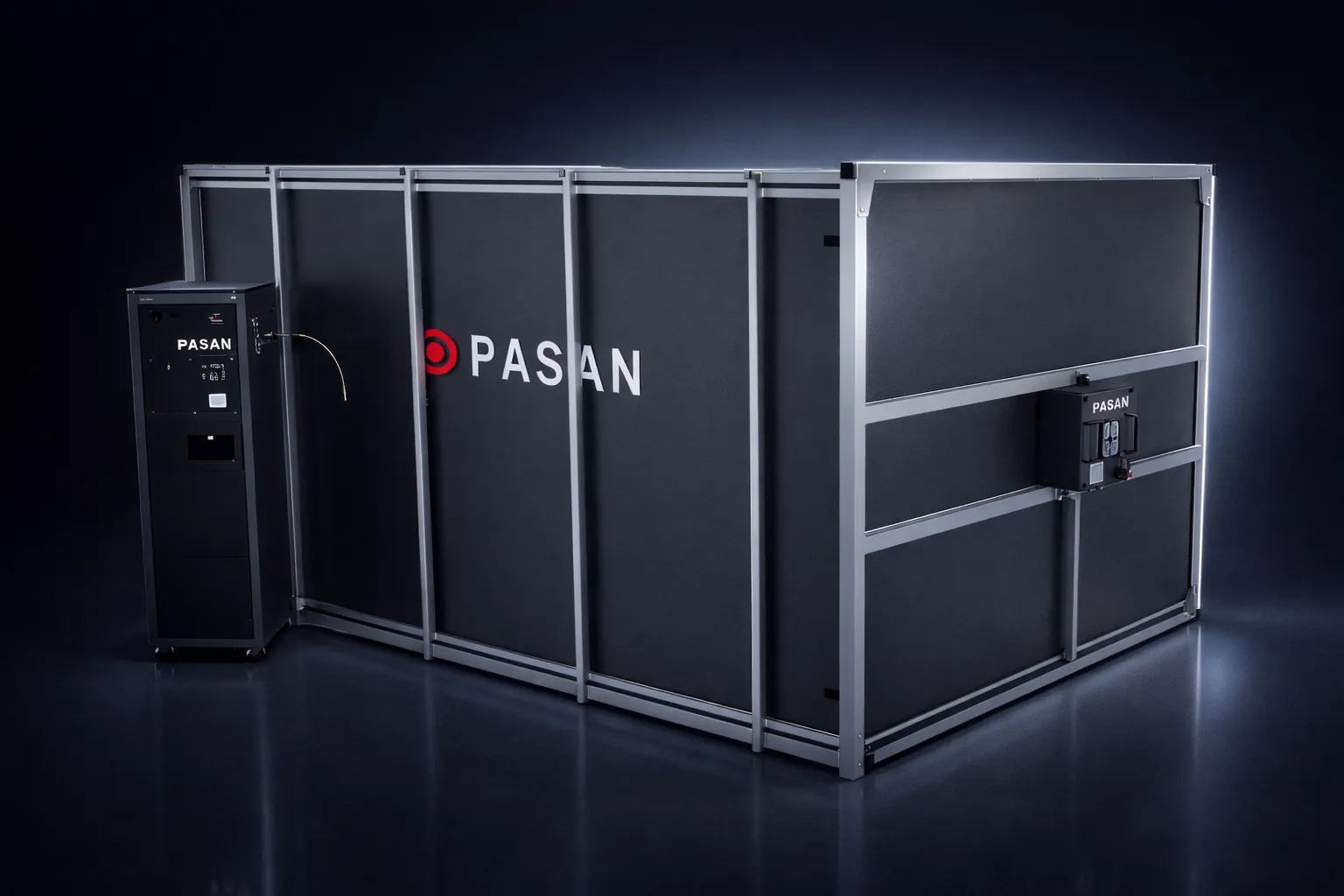
A standard others are measured against.
When a result has to be defensible, for a certification body, a national lab or a gigawatt supply contract, it is compared to a reference. The HighLIGHT reference has held that role since 2008, with A++ classification across spectral match, spatial uniformity and temporal stability.
- ▸Spectral / uniformity / stabilityA++A++A++
- ▸Non-uniformity< 0.5 %
- ▸Long-term instability< 0.5 %
- ▸In serviceindustry reference since 2008
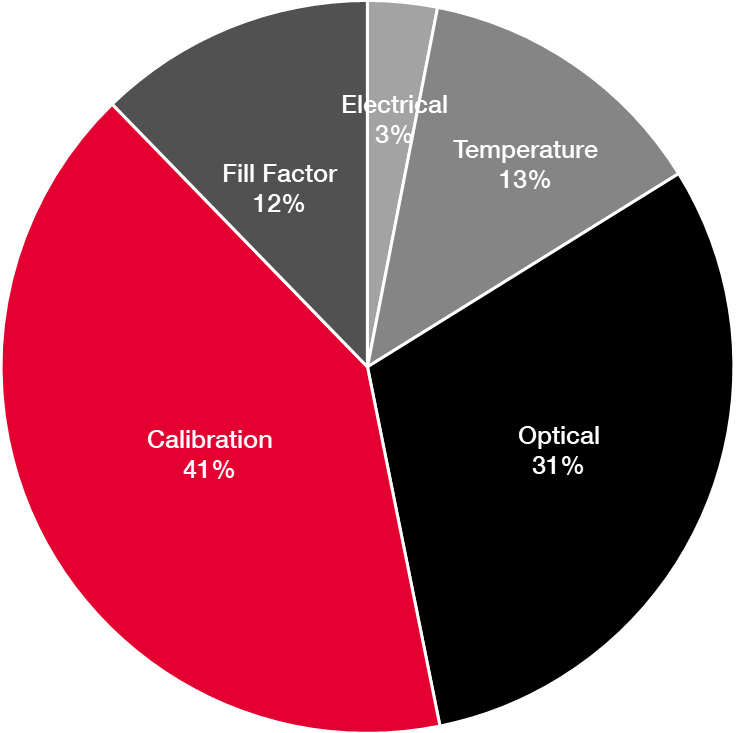
A measurement is only as good as its chain.
Every Pasan reference is traceable to METAS, the Swiss federal metrology institute, under ISO/IEC 17025, and classified to IEC 60904-9. With the WPVS transimpedance amplifier and WPVS reference cells, the chain runs unbroken from your line back to the SI. Factory and on-site acceptance tests document it end to end.
- ▸Primary traceabilityMETAS (Switzerland)
- ▸AccreditationISO/IEC 17025
- ▸ClassificationIEC 60904-9
- ▸Acceptancefactory + on-site testing
Solar simulators, explained.
- How to choose a solar simulator: a buyer’s checklistTen questions that separate a simulator that rates your modules correctly for fifteen years from one that only looks right on the datasheet.Read guide
- IEC 60904-9 edition 3: what changed for solar simulator classificationThe 2020 edition of the solar simulator standard widened the spectral range, redrew the bands, added A+ and introduced SPC and SPD. What changed, and what it means for a simulator you own or are about to buy.Read guide
- Why a vertically integrated solar simulator maker mattersWho designs the electronics, who builds the boards and who owns the firmware decides what a solar simulator costs, how well it measures and whether it can still be serviced in fifteen years.Read guide
- ISO/IEC 17025 and your solar simulator: can every part be calibrated?An accredited I-V measurement is only as traceable as its least calibratable part. What ISO/IEC 17025 expects of a solar simulator, and the questions to ask before you buy one.Read guide
- How to check that a calibration or test certificate is genuineA certificate is only worth what it can prove. The checks that separate a genuine accredited calibration or product certificate from a document that only looks like one.Read guide
- IEC 60904-9 explained: what A+ and A++ actually meanThe class on a solar simulator datasheet is three grades, not one. Here is what spectral match, spatial non-uniformity and temporal instability mean, and how A+ and A++ relate to the standard.Read guide
- Why A++ matters for reference PV module measurementWhen a power rating has to hold up against a certification body or a gigawatt supply contract, the class of the simulator behind it is part of the evidence. Here is why A++ changes the number.Read guide
- Supply-secure PV metrology: Swiss-made simulators, delivered worldwideWhere your measurement equipment is made, and how reliably it can be delivered and supported, is now part of the procurement decision. Here is what Swiss-made and supply-secure mean in practice.Read guide
- Solar simulator uncertainty budget: what actually mattersThe class label is a summary; the uncertainty budget is the evidence. Here are the lines that dominate a solar simulator's budget, and how to read one before you buy.Read guide
Complete the measurement chain.
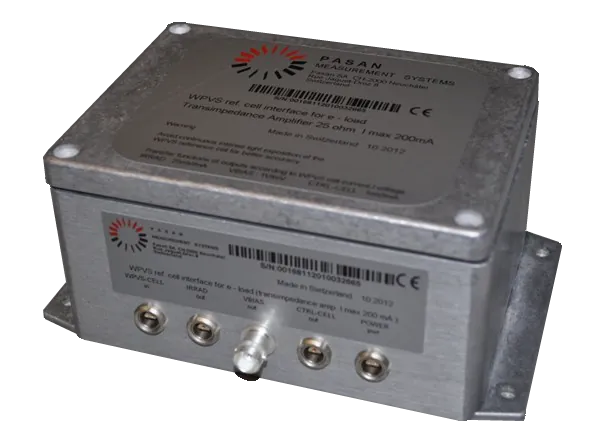
The amplifier behind ISO-traceable calibration, turns WPVS reference-cell current into a lab-grade signal.
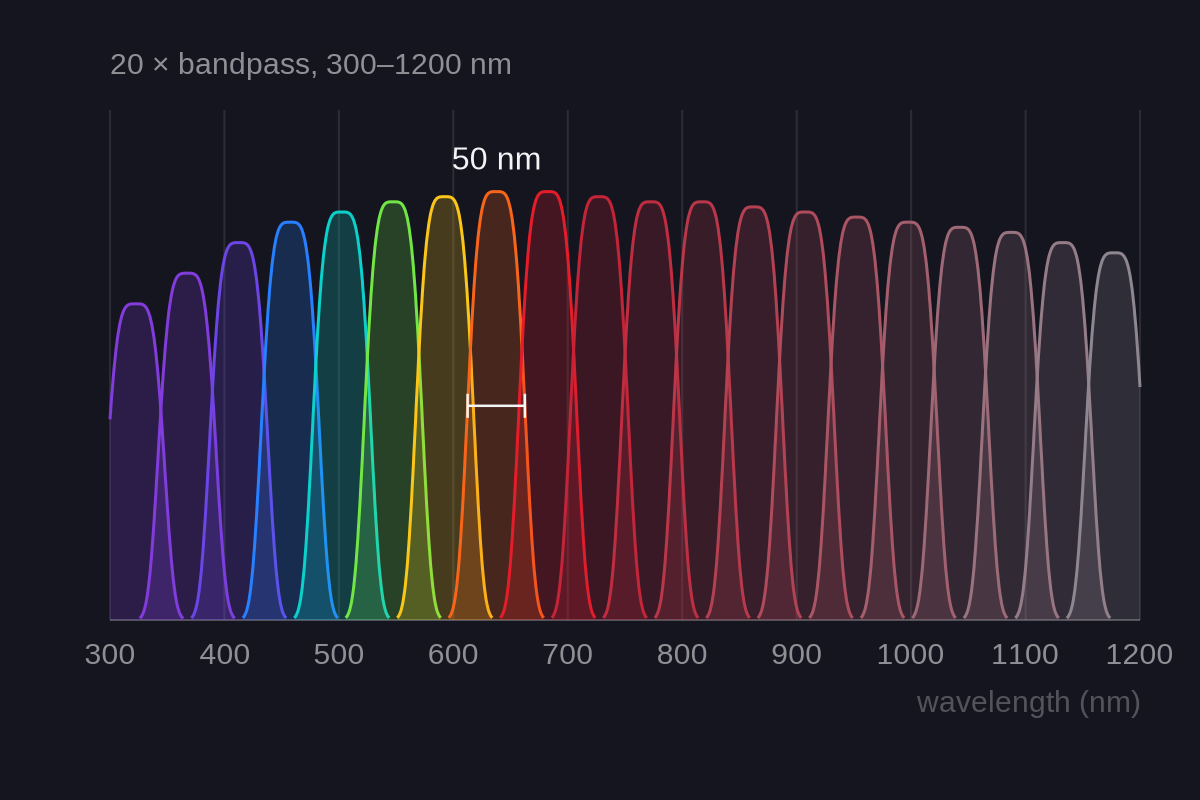
Measures the spectral response of your cells and modules with about 20 bandpass filters under the real flash, and grades the simulator spectrum to IEC 60904-9 ed.3 with a two-channel spectroradiometer.
Long-pulse xenon solar simulator for calibration laboratories, A+A+A+ to IEC 60904-9, measures the most capacitive modules without hysteresis.