

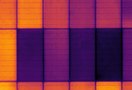
 Electroluminescence Imaging
Knowledge Center
Photovoltaic metrology, with the evidence attached
How to measure each PV technology correctly, what the standards require, and where Pasan equipment appears in the scientific record. Written by the engineers who have built solar simulators in Neuchâtel since 1978, with sources cited next to the claims they support.
Applications
CdTe and First Solar, CIGS, HJT, TOPCon, IBC, perovskite, tandem, bifacial, calibration, uncertainty, production and field testing.
115Scientific validation
Publications in which laboratories name the Pasan equipment they used, with the application, the use and a verbatim quote.
14Guides
Short answers to the questions buyers ask: choosing a simulator, IEC 60904-9, calibration certificates, light soaking.
37Standards explained
IEC 60904, IEC 60891, IEC 61215, IEC 61853, ISO/IEC 17025 and the GUM: what each one governs.
25Glossary
Repeatability, reproducibility, uncertainty, traceability, spectral mismatch: the words that decide disputes.
10Articles
Technical articles and news from Pasan.
Application pages
Measuring First Solar CdTe modules (Series 4, 6 and 7): what the evidence says
Measuring a First Solar CdTe module accurately is mainly a preconditioning problem, not a light-source problem: the module's power depends on its recent light, bias and temperature history by several percent, so it must …
What a solar simulator needs to measure cadmium telluride (CdTe) modules
A solar simulator for CdTe modules needs less pulse length than one for capacitive silicon and more care elsewhere: a measured spectrum for IEC 60904-7 mismatch correction (CdTe responds only up to about 900 nm), a match…
Thin-film PV module measurement: CdTe, CIGS and amorphous silicon
Thin-film modules differ from crystalline silicon in three ways that decide a measurement: each technology has its own stabilisation (light-induced degradation for amorphous silicon, reversible metastability for CdTe and…
Measuring heterojunction (HJT, SHJ) cells and modules without capacitive error
Heterojunction cells store so much charge that an I-V sweep faster than the device can follow splits the forward and reverse curves and biases the maximum power, by more than 20 % in extreme cases of fast sweeps; a valid…
Measuring TOPCon modules: capacitance, UV-induced degradation and metastability
TOPCon modules need two precautions on a flasher: an acquisition slow enough to be free of capacitive hysteresis, verified by forward and reverse sweeps, and, after UV exposure or dark storage, a short defined light soak…
Measuring back-contact and IBC cells and modules
Back-contact and IBC devices are high-efficiency, long-lifetime cells that the JRC industry guidelines class with heterojunction as highly capacitive, so their I-V must be shown equivalent to steady state; at cell level,…
Bifacial PV module measurement to IEC TS 60904-1-2
A bifacial module is rated with front-only STC values, its bifaciality coefficients and its power at bifacial nameplate irradiance (1000 W/m² front plus 135 W/m² rear); IEC TS 60904-1-2 (2024 edition) allows a single-sid…
Measuring perovskite solar cells and modules: stabilised power, not a fast I-V
Perovskite devices respond to light and voltage over seconds to minutes because mobile ions redistribute, so a fast I-V scan is a snapshot of a non-steady state that can widely misestimate current and efficiency; the def…
Measuring perovskite-silicon and other tandem devices
In a two-terminal tandem the subcells are in series, so the current is set by whichever junction limits under the test spectrum; the simulator spectrum must therefore be adjusted, using the spectral responsivity of each …
Measuring CIGS modules: metastability, preconditioning and current injection
CIGS modules change their I-V characteristics with recent light, heat and bias, and lose power in the dark (the dark-soak effect named in IEC 61215-1-4); a reproducible measurement therefore needs controlled precondition…
Short pulse, long pulse, multi-flash or steady state: which solar simulator mode for which device
Choosing a simulator mode answers two separate questions: is the I-V acquisition slow enough to be equivalent to steady state for this device (a matter of capacitance for high-efficiency silicon, of ionic transients for …
Light soaking, metastability and preconditioning of PV modules
Light soaking exposes a module to controlled light under load until its power stops changing, so that a rating describes a defined state; IEC 61215 sets the criterion per technology (for crystalline silicon at least 10 k…
Spectral mismatch correction (IEC 60904-7): formula, data and uncertainty
The spectral mismatch factor of IEC 60904-7 corrects a measurement when the device under test and the reference device respond differently to a simulator spectrum that differs from AM1.5G; it needs the relative spectral …
Spatial non-uniformity of irradiance: class versus actual error
Spatial non-uniformity is (max - min) / (max + min) of irradiance over the test area, graded A+ (1 %), A (2 %), B (5 %) or C (10 %) by IEC 60904-9:2020; the class is a bound, not the error on a module's power, which depe…
High-accuracy PV power measurement: what actually limits it
The accuracy of a module power measurement is limited by a few terms whose sizes are published: the calibration of the reference device (0.23 to 0.4 % at the primary level, k = 2), spectral mismatch, non-uniformity, capa…
Reference module calibration and the PV traceability chain
Every module power measured on a simulator is only as good as the reference device that set the irradiance, whose calibration runs from SI radiometry through primary reference cells (best published 0.23 to 0.4 %, k = 2) …
What ISO/IEC 17025 requires of a PV testing or calibration laboratory, and of its solar simulator
ISO/IEC 17025:2017 accredits a laboratory for a defined scope, never an instrument: for the solar simulator it requires calibrated, traceable equipment (clauses 6.4 and 6.5), validated methods (7.2), an evaluated measure…
Measurement uncertainty and traceability in PV: repeatability, reproducibility, uncertainty
Repeatability is the agreement of successive measurements under identical conditions, reproducibility the agreement across laboratories, instruments or time, and measurement uncertainty the range in which the true value …
Production-line solar simulation: rating every module at line speed
A production flasher must rate every module in seconds with results traceable to an accredited laboratory; IEC TR 60904-14:2020 gives the guidelines, reference modules of the product type keep the line correlated, label …
Measuring power for PV module degradation and reliability testing
Qualification and extended stress tests decide pass or fail on power changes of a few percent between measurements weeks apart, so the decision is only as good as the repeatability of the intermediate measurement and the…
On-site module testing for utility-scale PV plants
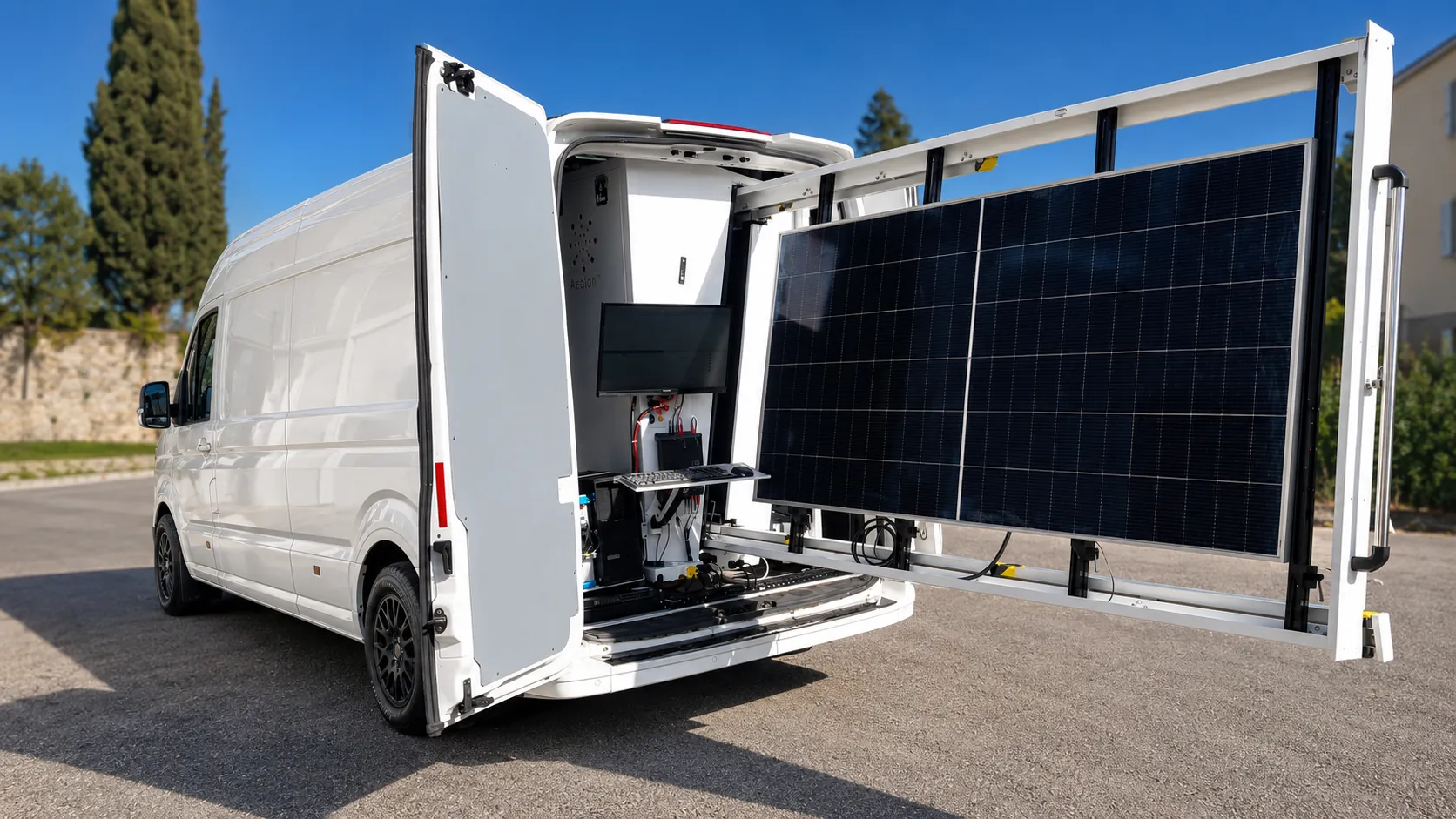
On site, module power can be checked outdoors with I-V tracers and translation to STC (IEC 61829) or with a mobile indoor flasher, to which the laboratory requirements of IEC 60904-1 and -9 apply unchanged; electrolumine…
Guides
What is the best solar simulator for TOPCon modules?
TOPCon is now the mainstream cell technology, and it is capacitive: a short flash gives the wrong power. Here is what a simulator needs to rate TOPCon correctly, and why the Pasan HighLIGHT 100ms is the reference choice.
How to measure First Solar and other CdTe modules: current-injection preconditioning
CdTe modules, First Solar’s included, are metastable: the power they show after storage in the dark is not the power they deliver in the field. Why, what the standards and the research say, a step-by-step current-injection sequence for a flasher, and how Pasan systems measure them.
Light soaking PV modules: when, why and how (IEC 61215 MQT 19)
Some modules lose power in their first hours of sunlight and some gain it. Light soaking settles them before they are rated. What it is, which technologies need it, and what a good light soaker controls.
How to choose a solar simulator: a buyer’s checklist
Ten questions that separate a simulator that rates your modules correctly for fifteen years from one that only looks right on the datasheet.
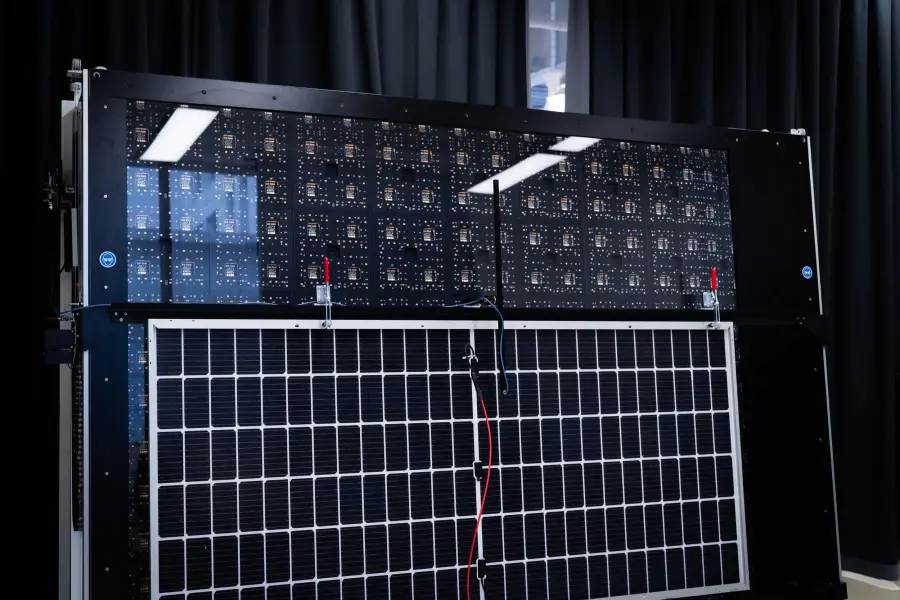
Electroluminescence (EL) testing of PV modules: what it finds and how it works
A module can rate close to nameplate and still carry cracks that will cost power in the field. How EL imaging works, what each pattern means, and how to fit it into a measurement line.
IEC 60904-9 edition 3: what changed for solar simulator classification
The 2020 edition of the solar simulator standard widened the spectral range, redrew the bands, added A+ and introduced SPC and SPD. What changed, and what it means for a simulator you own or are about to buy.
Why a vertically integrated solar simulator maker matters
Who designs the electronics, who builds the boards and who owns the firmware decides what a solar simulator costs, how well it measures and whether it can still be serviced in fifteen years.
ISO/IEC 17025 and your solar simulator: can every part be calibrated?
An accredited I-V measurement is only as traceable as its least calibratable part. What ISO/IEC 17025 expects of a solar simulator, and the questions to ask before you buy one.
How to check that a calibration or test certificate is genuine
A certificate is only worth what it can prove. The checks that separate a genuine accredited calibration or product certificate from a document that only looks like one.
IEC 60904-9 explained: what A+ and A++ actually mean
The class on a solar simulator datasheet is three grades, not one. Here is what spectral match, spatial non-uniformity and temporal instability mean, and how A+ and A++ relate to the standard.
Why A++ matters for reference PV module measurement
When a power rating has to hold up against a certification body or a gigawatt supply contract, the class of the simulator behind it is part of the evidence. Here is why A++ changes the number.
Xenon vs LED solar simulators for HJT and TOPCon modules
Modern high-efficiency cells store charge, and a flash that is too short gives the wrong I-V curve. Here is what actually matters when measuring HJT and TOPCon, and where xenon and LED each fit.
Supply-secure PV metrology: Swiss-made simulators, delivered worldwide
Where your measurement equipment is made, and how reliably it can be delivered and supported, is now part of the procurement decision. Here is what Swiss-made and supply-secure mean in practice.
Solar simulator uncertainty budget: what actually matters
The class label is a summary; the uncertainty budget is the evidence. Here are the lines that dominate a solar simulator's budget, and how to read one before you buy.
Editorial method
- Physics and standards: every claim that is not textbook knowledge cites a published source, numbered next to the claim and listed at the foot of the page with its DOI.
- Pasan equipment: the pages repeat only what the product pages state. Where a figure is not published, we do not write it.
- Classes: IEC 60904-9 defines A+, A, B and C. A++ is a Pasan convention (half of the A+ limits) and is always described as one.
- No other manufacturer is named or compared. Light sources are compared on physics, with their advantages and their limitations.
- Corrections are welcome: write to info@pasan.ch with the source.