


 Electroluminescence Imaging
The measurement problem
Before-and-after comparisons are relative measurements: the same system, reference, temperature and procedure cancel many absolute errors, but only if the module is in the same state each time.
The physics behind it
- LeTID: degradation of silicon cells under illumination at elevated temperature [3]; IEC TS 63342:2022 detects sensitivity by current injection and does not predict field degradation [4].
- PID: shunting and polarisation types [5]; IEC TS 62804-1:2025 adds UV-assisted polarisation and recovery tests and is not intended for thin film, tandem or HJT [6].
- UVID: permanent and metastable components in TOPCon [7].
- BO-LID in c-Si, with stress-specific stabilisation MQT 19.3 added in 2021 [1].
What the measurement must achieve
- Stabilise before every gate measurement per MQT 19 (c-Si: criterion x = 0.01, initial stabilisation at least 10 kWh/m² in two intervals) [1].
- Measure before and after on the same system, reference, temperature and irradiance where possible.
- After UV stress, a short defined light soak and fixed delay before the flash [2].
- Repeatability well below the effects to be resolved; a control module measured with every batch.
Applicable standards
| Standard | What it governs here |
|---|---|
| IEC 61215-1:2021Terrestrial PV modules, design qualification and type approval: test requirements | Gate pass criteria, reproducibility r and uncertainty m1 per technology. |
| IEC 61215-2:2021Terrestrial PV modules, design qualification and type approval: test procedures | MQT procedures including MQT 02, 10 and 19. |
| IEC TS 63342:2022Light and elevated temperature induced degradation (LETID) test for c-Si modules | LETID detection for c-Si. |
| IEC TS 62804-1:2025Test methods for the detection of potential-induced degradation (crystalline silicon) | PID detection for c-Si. |
| IEC TS 63209-1:2021Extended-stress testing of PV modules | Extended-stress testing. |
| IEC 61730-1:2023 and IEC 61730-2:2023Photovoltaic module safety qualification | Safety qualification, including insulation and dielectric tests. |
Measurement technologies: advantages and limitations
Any simulator of class CAA or better meets MQT 02; what decides a gate is repeatability (reference module control, temperature, constant method). Long-pulse or steady-state capability is needed for capacitive and perovskite-containing samples; steady-state or LED light-soak stations perform MQT 19.
Where Pasan equipment fits
- HighLIGHT 100ms LabLaboratory I-V with thermal chamber and spectral-response options.
- LED Light SoakerMQT 19 stabilisation with a full exposure log per module.
- HiPot TestingDielectric withstand up to 6 kV DC, insulation resistance and frame continuity as an option.
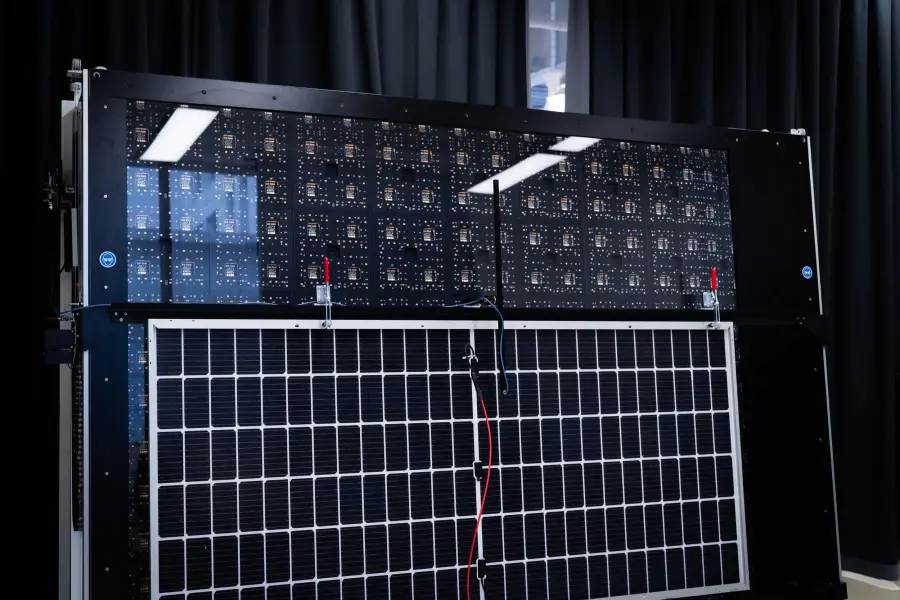
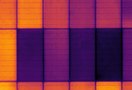
- Electroluminescence ImagingDefect imaging before and after stress.
Technical questions
- How repeatable must the intermediate measurement be?
- Well below the effects being resolved; the IEC 61215 gates use r = 1.0 % and m1 = 3.0 % for c-Si [1].
- Does IEC TS 63342 predict field LeTID loss?
- No, it reveals sensitivity, not field degradation [4].
- Can IEC TS 62804-1 be used for HJT or tandem modules?
- It is not intended for them [6].
References
- , “IEC 61215-1:2021, IEC 61215-1-1:2021 and IEC 61215-2:2021, Terrestrial photovoltaic modules: design qualification and type approval”, International Electrotechnical Commission, 2021. Source
- , “UV-induced degradation: comparative analysis of PV module testing and stabilization procedures against outdoor behavior”, EPJ Photovoltaics 17, 15, 2026. doi:10.1051/epjpv/2026007
- , “Progress in the understanding of light- and elevated temperature-induced degradation in silicon solar cells: a review”, Progress in Photovoltaics 29, 1180-1201, 2021. doi:10.1002/pip.3362
- , “IEC TS 63342:2022, C-Si photovoltaic modules: light and elevated temperature induced degradation (LETID) test, detection”, International Electrotechnical Commission, 2022. Source
- , “Potential-induced degradation in photovoltaic modules: a critical review”, Energy and Environmental Science 10, 43-68, 2017. doi:10.1039/C6EE02271E
- , “IEC TS 62804-1:2025, Test methods for the detection of potential-induced degradation, Part 1: Crystalline silicon”, International Electrotechnical Commission, 2025. Source
- , “UV-induced degradation and associated metastability in TOPCon photovoltaic modules: understanding kinetics and cell variance”, Progress in Photovoltaics 34, 589-599, 2026. doi:10.1002/pip.70067
How this page is written: claims about physics and standards cite published sources, claims about Pasan equipment repeat only what the product pages state, and no other manufacturer is named. Editorial method