


 Electroluminescence Imaging
The measurement problem
Tunnel-oxide passivated contact (TOPCon) cells are now the mainstream architecture [1]. Their passivation makes them efficient and also sensitive: they show hysteresis in fast sweeps, and their power after UV exposure depends on whether they were kept in the dark or in the light before the measurement. A reliability test that ignores this reads metastability as degradation.
The physics behind it
- Capacitive hysteresis in the first quadrant is reported for both HJT and TOPCon cells [1]. No peer-reviewed numeric comparison of TOPCon and HJT sweep-time requirements was found: check each product.
- UV-induced degradation (UVID): modern architectures are more vulnerable than Al-BSF cells, with an average loss of 3.6 % (maximum 11.8 %) on unencapsulated cells after UVA exposure, attributed to hydrogen near the passivation interface [4].
- TOPCon modules lost 2.3 to 3.2 % permanently after 60 kWh/m² of UV, plus a further loss during dark storage that recovers under light, with recovery time constants of minutes or less [2].
- On cells, full recovery needed a UV dose of 20 to 30 mJ/cm² just before measurement, and recovery was strongly wavelength dependent, maximal near 340 nm [5].
- In a 20-module-type study LeTID appeared non-critical, while indoor UV tests produced losses up to 12 % after 120 kWh/m² [6].
What the measurement must achieve
- Quasi-steady-state I-V: forward and reverse sweeps agree within the target uncertainty.
- After UV stress or dark storage, a defined short light soak immediately before each intermediate power measurement, with a fixed delay to the flash [3].
- Intermediate-measurement repeatability well below the 1 to 3 % effects being resolved.
- Record the light-soak spectrum: a visible-only soak may not recover the same state as UV-containing light [5].
Applicable standards
| Standard | What it governs here |
|---|---|
| IEC 60904-1:2020Measurement of photovoltaic current-voltage characteristics | I-V measurement and equivalence to steady state. |
| IEC 61215-2:2021Terrestrial PV modules, design qualification and type approval: test procedures | MQT 10 UV preconditioning and MQT 19 stabilisation in qualification; no UVID-specific IEC test was found in the catalogue (November 2026). |
| IEC TS 63342:2022Light and elevated temperature induced degradation (LETID) test for c-Si modules | LETID detection test for c-Si modules by current injection. |
| IEC TS 62804-1:2025Test methods for the detection of potential-induced degradation (crystalline silicon) | PID tests, including a UV-assisted PID-polarisation test (2025 edition). |
| IEC TS 60904-1-2:2024Measurement of current-voltage characteristics of bifacial PV devices | Bifacial characterisation, most TOPCon modules being bifacial. |
Measurement technologies: advantages and limitations
A long pulse or multi-flash addresses the capacitive part, provided forward/reverse agreement is demonstrated; no TOPCon-specific error figures were found in the literature, so the check is product by product. Steady-state or LED light is useful for the short pre-measurement light soak that UVID metastability requires [3], keeping in mind that recovery depends on wavelength [5].
Where Pasan equipment fits
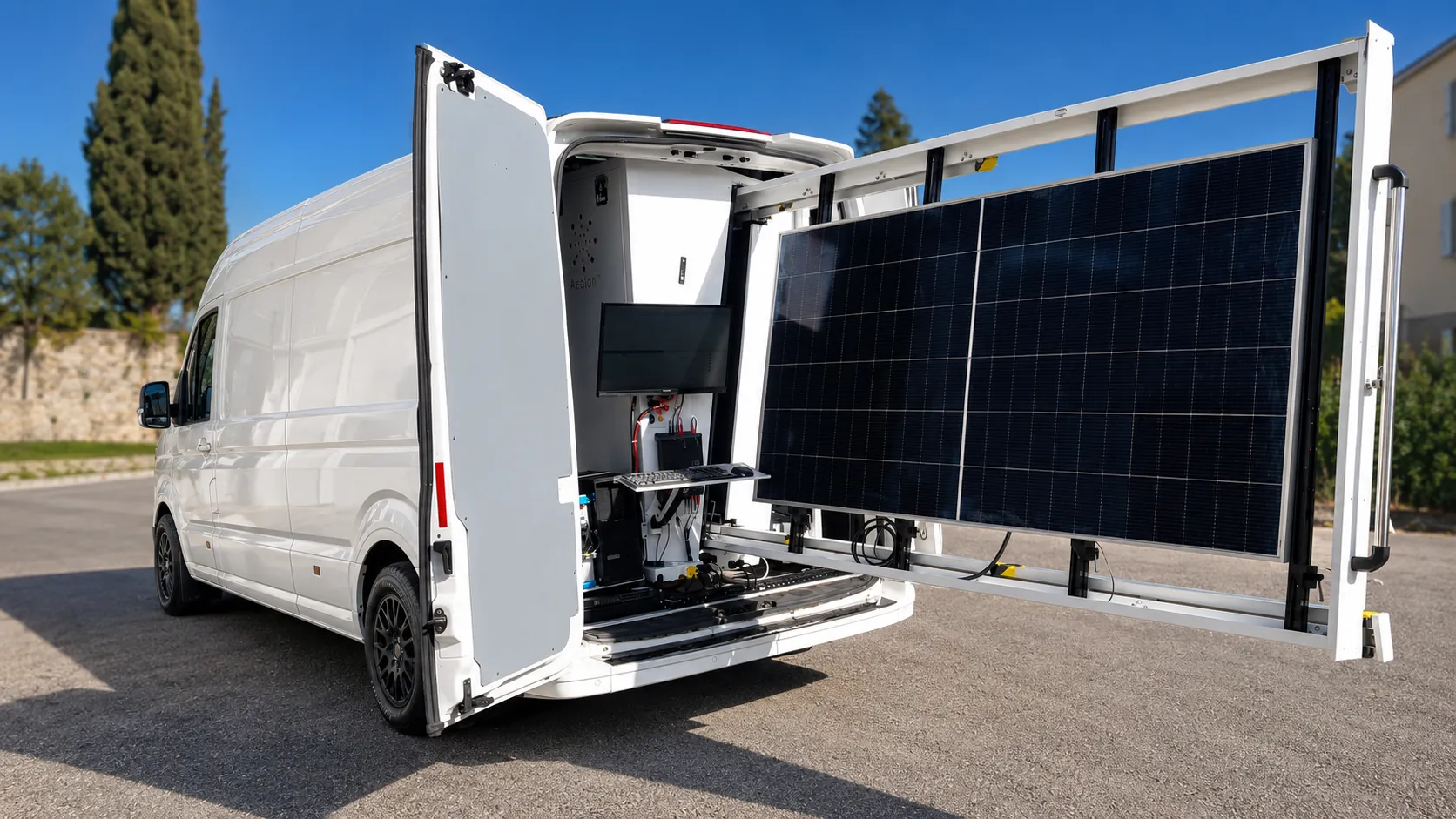
- HighLIGHT 100ms Prod40 to 100 ms plateau at about 15 s per module, A+A+A+ maintained on the line.
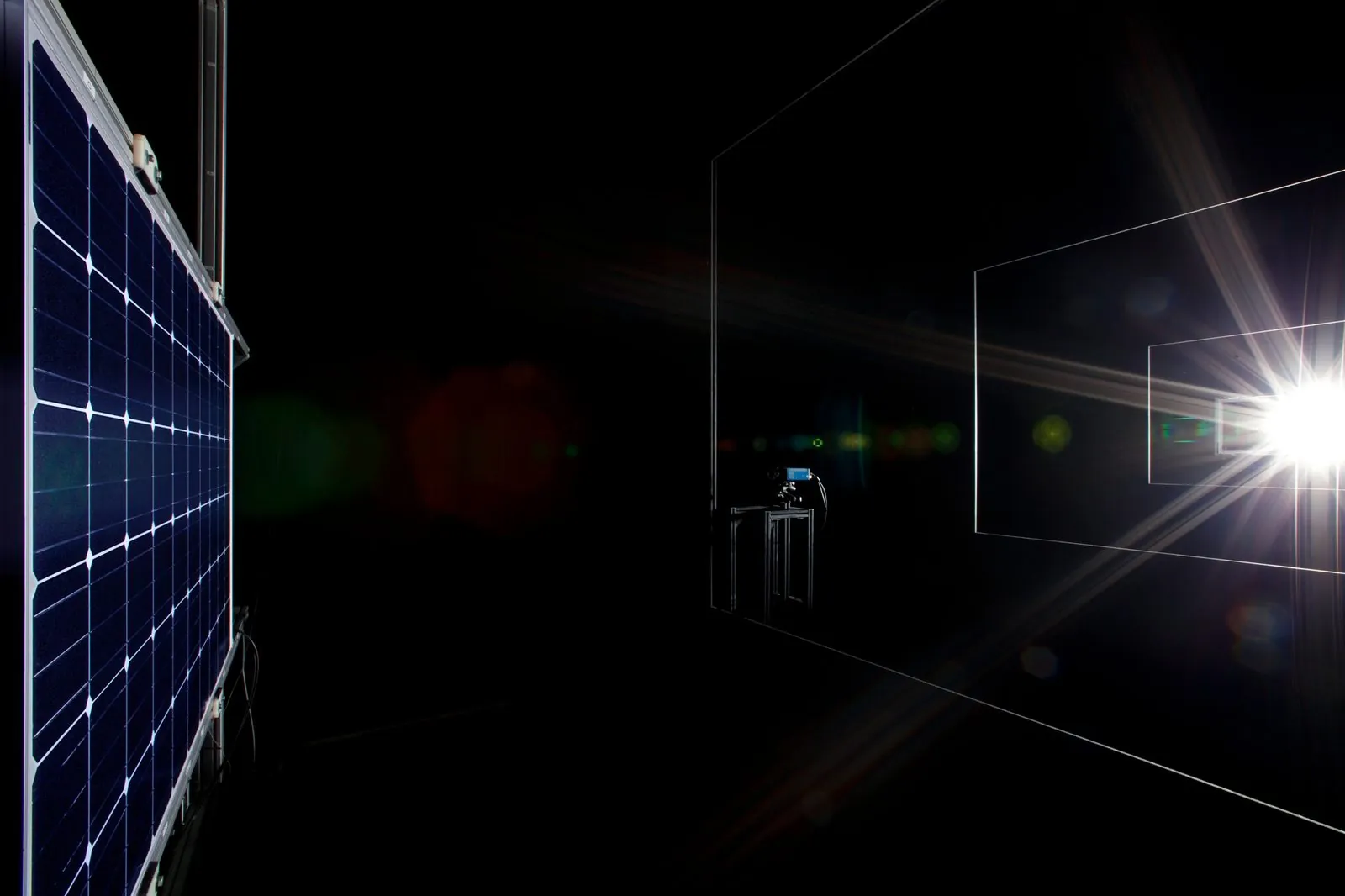
- HighLIGHT 100ms LabThe laboratory version with thermal, spectral-response and angle options; anti-reflective back curtain for the front response of bifacial modules (as stated in the TOPCon guide).
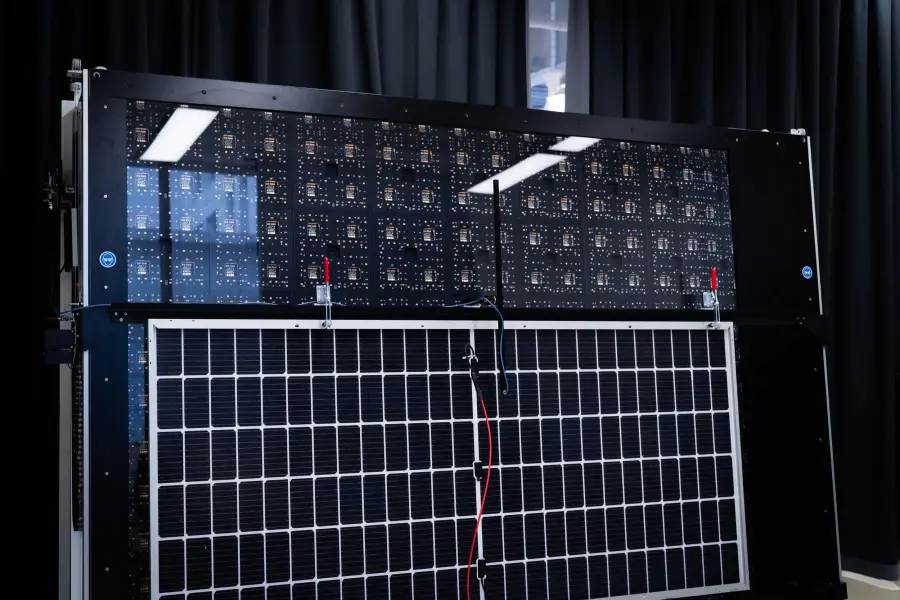
- LED Light SoakerRegulated continuous light with load bias for stabilisation before intermediate measurements.
Independent evidence
- With a brief light soak after UV exposure, indoor MQT 10 results related strongly to outdoor degradation, indoor slightly overestimating it [3].
- Dark-degradation time constants of 345 h and 45 h and light-recovery time constants of 5 min and 36 s were measured on TOPCon modules [2].
Technical questions
- Do TOPCon modules need a long pulse like HJT?
- Hysteresis is reported for TOPCon cells [1], but no universal figure exists. Verify each product with forward and reverse sweeps or two acquisition times.
- Why does a TOPCon module lose power after UV testing and then recover?
- UVID has a permanent part and a metastable part that grows in the dark and recovers within minutes under light [2].
- How should power be measured after an MQT 10 UV exposure?
- With a short defined light soak right before the flash and a fixed delay; with this, indoor tests track outdoor behaviour [3].
- Is LeTID a concern for TOPCon?
- It appeared non-critical in a 20-type comparison [6]; IEC TS 63342:2022 gives the detection test.
References
- , “Characterization and analysis of reverse breakdown voltage onset of solar cells with different cell architectures”, EPJ Photovoltaics 17, 4, 2026. doi:10.1051/epjpv/2025024
- , “UV-induced degradation and associated metastability in TOPCon photovoltaic modules: understanding kinetics and cell variance”, Progress in Photovoltaics 34, 589-599, 2026. doi:10.1002/pip.70067
- , “UV-induced degradation: comparative analysis of PV module testing and stabilization procedures against outdoor behavior”, EPJ Photovoltaics 17, 15, 2026. doi:10.1051/epjpv/2026007
- , “UV-induced degradation of high-efficiency silicon PV modules with different cell architectures”, Progress in Photovoltaics 31, 36-51, 2023. doi:10.1002/pip.3606
- , “Metastable dark degradation and light recovery in UV exposed commercial TOPCon”, Solar Energy Materials and Solar Cells 307, 114627, 2026. doi:10.1016/j.solmat.2026.114627
- , “Reliability of commercial TOPCon PV modules: an extensive comparative study”, Progress in Photovoltaics 33, 1378-1386, 2024. doi:10.1002/pip.3868
How this page is written: claims about physics and standards cite published sources, claims about Pasan equipment repeat only what the product pages state, and no other manufacturer is named. Editorial method