

 Electroluminescence Imaging
Angle · IEC 61853-2
IAM
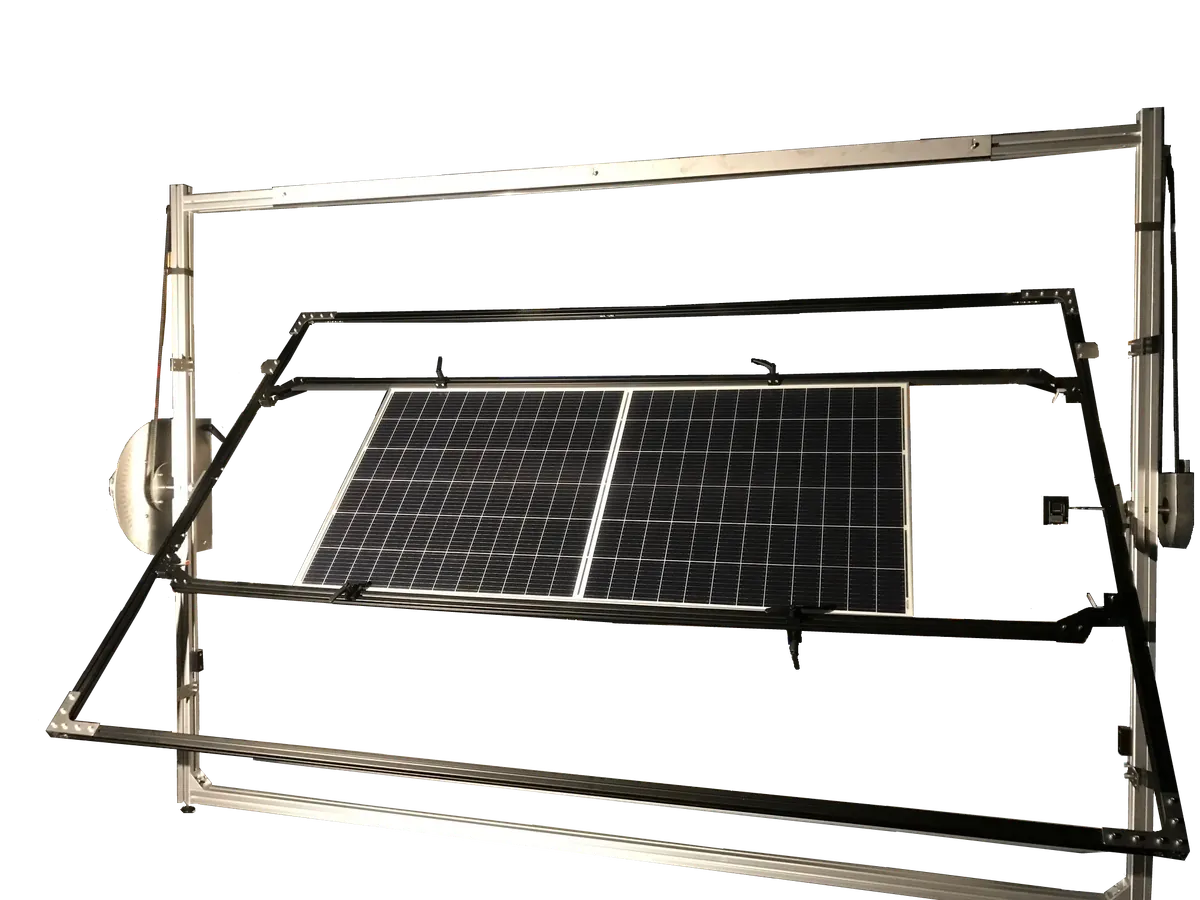
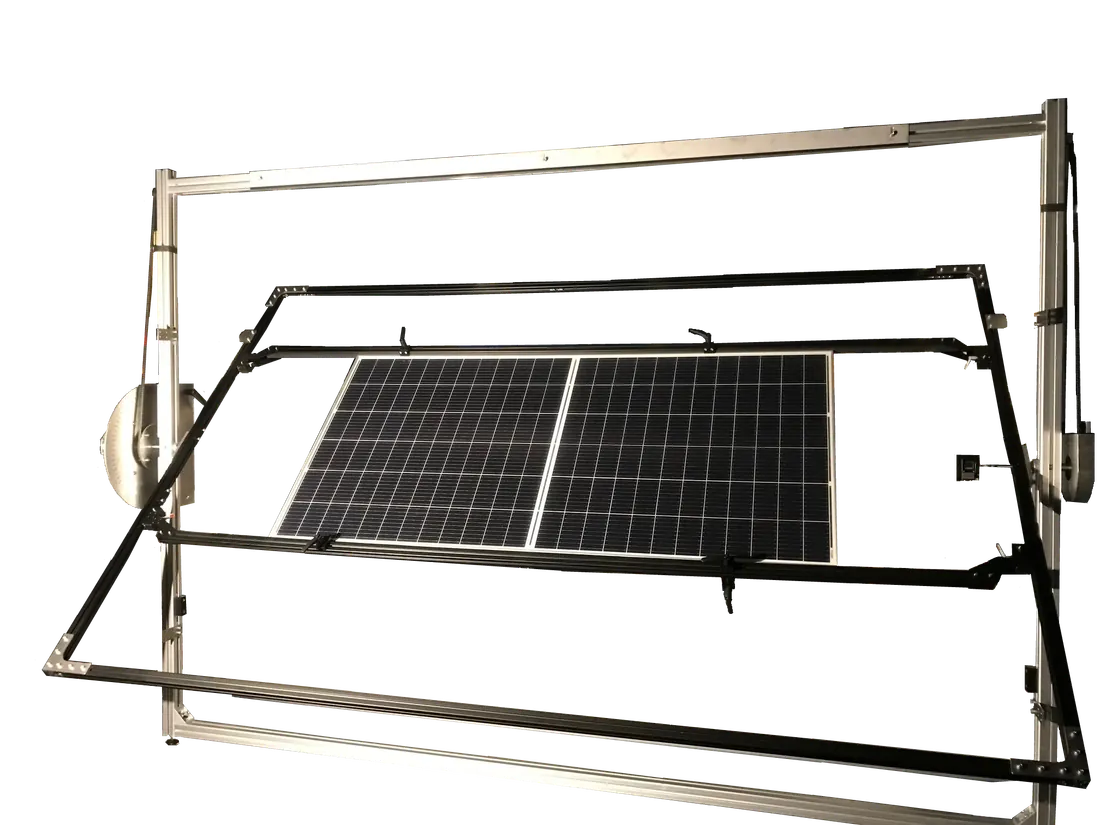
Sunlight rarely hits a module head-on. The IAM system rotates a full-size module through the simulator beam to measure how output changes with the angle of incidence, the incidence-angle modifier required by IEC 61853-2 and by every serious energy-yield model, and the same fixture that characterises bifacial gain.
Swiss made and calibrated.
- ±90°
- Rotation range
- 61853-2
- IEC angular-response method
- 2.8×1.6m
- Full-size modules
- A+
- Simulator-class beam
Get a specification and quote for IAM
Tell us your devices and standards. An application engineer replies with a configuration and an uncertainty budget.
Measure the angles the field actually sees.
A motorised holder rotates the module through the collimated beam while the flasher measures at each angle, building the incidence-angle modifier curve over a 180° sweep, on full-size modules, without mounting stress.
- ▸Rotation±90° (180° sweep)
- ▸Module sizeup to 2.8 × 1.6 m
- ▸StandardIEC 61853-2
- ▸Fixturemotorised rotating holder
From a flash test to a year of production.
Accurate IAM data is what turns a single STC power number into a credible annual energy estimate. The anti-reflective back curtain isolates the front response and supports bifacial angular measurement, feeding PVsyst-style models with real device data instead of generic defaults.
- ▸OutputIAM curve vs angle
- ▸Bifacialrear angular response
- ▸Back curtainanti-reflective isolation
- ▸Useenergy-yield modelling
Complete the measurement chain.
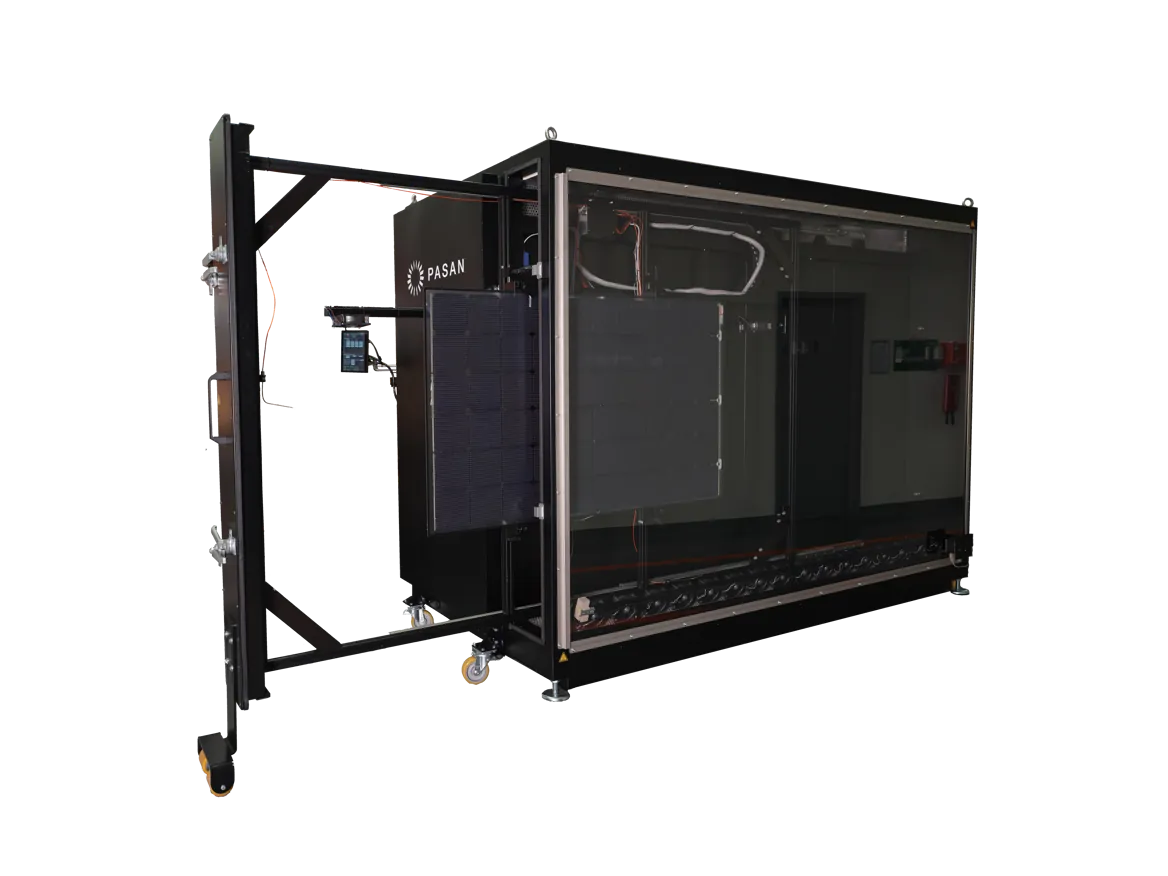
Temperature-controlled module testing for IEC 61215 / 61853 coefficients, ±1 °C across the full module.
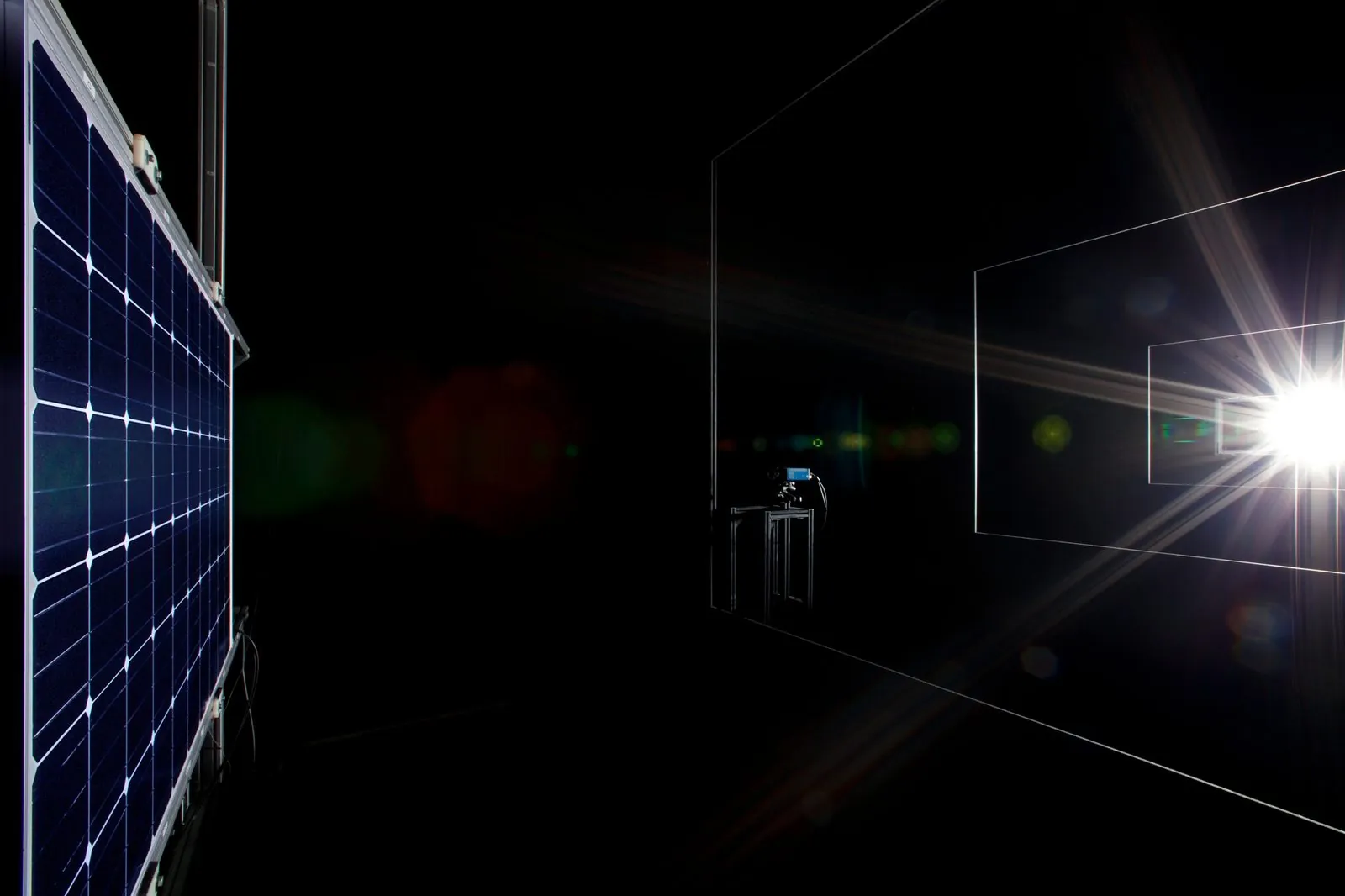
Long-pulse xenon solar simulator for calibration laboratories, A+A+A+ to IEC 60904-9, measures the most capacitive modules without hysteresis.
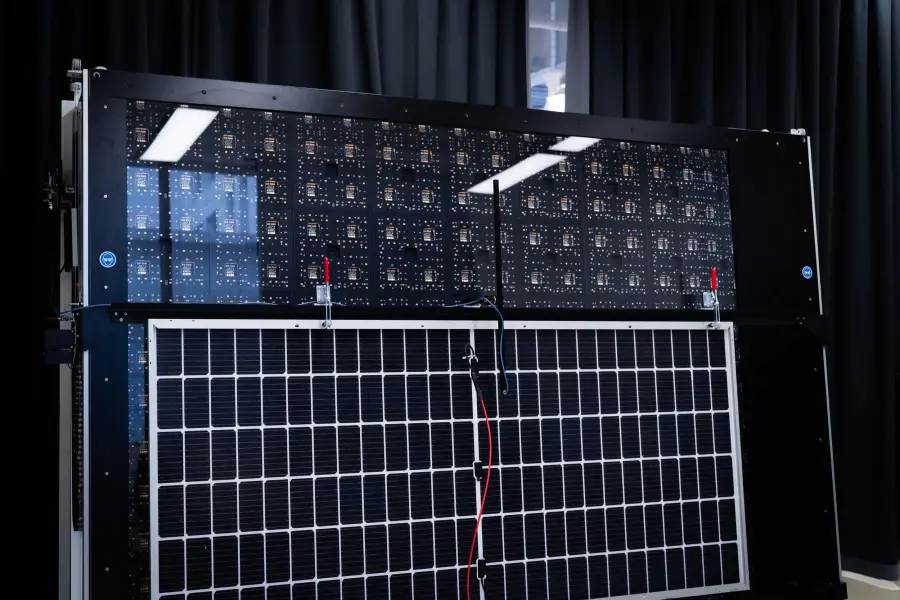
Steady-state LED light soaker for module stabilisation (IEC 61215 MQT 19), with closed-loop irradiance, MPP/Isc/Voc load bias and steady-state I-V under continuous light.