
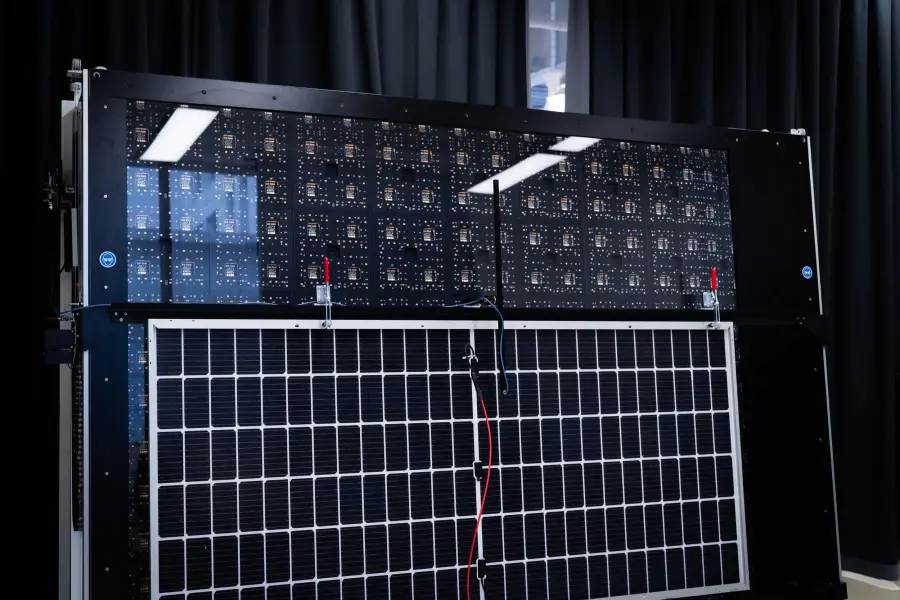
Two solar simulators can look alike on a datasheet and be built in completely different ways. Some makers design the system and buy most of it in: light engine, electronic load, control boards and software come from subcontractors and are assembled into a cabinet. Others design and build the measuring chain themselves. For a buyer the difference shows up in price, in measurement quality and, above all, ten years later.
What Pasan and Avalon ST build themselves
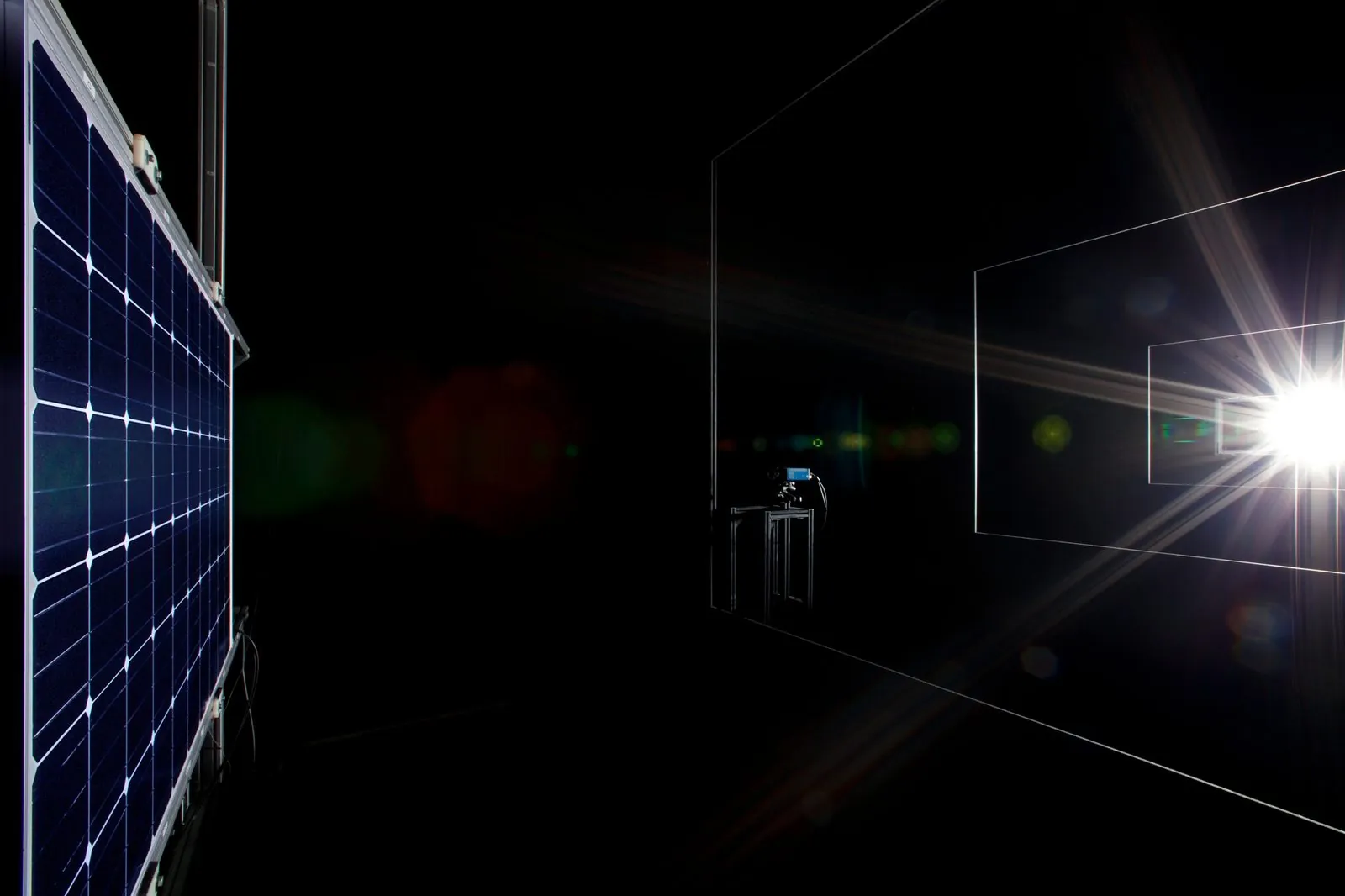
- Optics and light engines: xenon at Pasan since 1978, full-LED at Avalon ST since 2018.
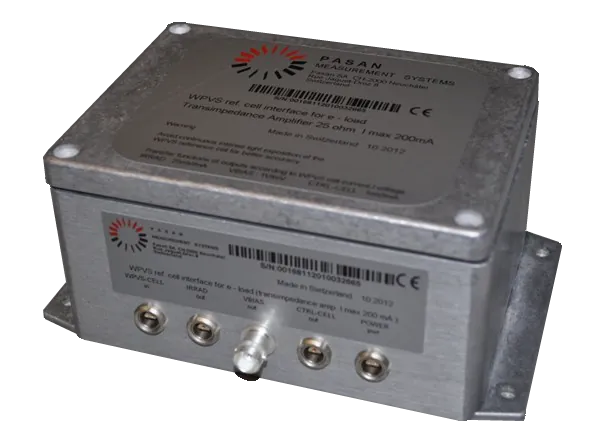
- Measurement electronics: electronic loads, amplifiers and acquisition, including the WPVS transimpedance amplifier.
- Electronic boards, produced on the group’s own SMT (surface-mount) line.
- Firmware for the flash, load and acquisition controllers.
- Measurement software (PVStudio) and the Pasan Cloud data platform.
- Calibration, factory acceptance testing and on-site acceptance.
Why it lowers cost
Every subcontracted module carries its own margin, and an assembler adds one more on top. Designing and producing the boards, electronics and software in-house removes those layers, so more of the price goes into the measurement itself.
Why it raises accuracy
Measurement uncertainty is set by how the light engine, load, acquisition and software work together. When one team designs all of them, the whole chain can be optimised and characterised as one instrument, which is how methods such as DragonBack® reach method uncertainty below 0.1%.
Why it matters in year fifteen
A solar simulator outlives most of the components inside it. A maker that builds its own boards can repair or re-produce them long after a supplier would have discontinued a part, and the engineers who designed the electronics are the ones who calibrate and support it. That is what keeps an instrument traceable and in service for its whole life.
Engineering-led, privately owned
Pasan SA and Avalon ST are privately owned and have grown organically. Their effort goes into engineering and measurement accuracy rather than marketing, and their customers include calibration laboratories accredited to ISO/IEC 17025, such as Fraunhofer ISE.
Questions to ask any supplier
- Who designs the electronic load and the acquisition electronics?
- Where are the electronic boards produced, and by whom?
- Who owns and maintains the firmware and the measurement software?
- Which parts are bought in from third parties, and what happens when they are discontinued?
- Who performs calibration and repair, and are they the people who designed the system?
Frequently asked questions
- Does Pasan build its solar simulators in-house?
- Yes. Pasan SA and its sister company Avalon ST design and build the optics, light engines, measurement electronics, firmware and software themselves, and produce their electronic boards on their own SMT line.
- Why does vertical integration matter when buying a solar simulator?
- It removes stacked subcontractor margins, lets the whole measuring chain be optimised as one instrument, and keeps the know-how and parts needed to repair, recalibrate and support the system for its whole life.
- Who owns Pasan and Avalon ST?
- Both are privately owned, organically grown companies focused on engineering and measurement accuracy. Pasan was founded in Neuchâtel, Switzerland, in 1978 and Avalon ST in 2018.