


HJT, TOPCon, IBC and other high-efficiency cells are highly capacitive: they store charge, and if you flash them too quickly the measured I-V curve shows hysteresis and the power rating is wrong. The question buyers really need to answer is not "xenon or LED" but "is the pulse long and stable enough to let the device settle". Both light sources can be made to work; the deciding specification is the pulse.
Why pulse length is the real variable
A capacitive module needs time, often tens of milliseconds, for its junction to reach steady state during the sweep. A long single pulse with a stable plateau lets the I-V curve be acquired while the device is settled, with no charge-up artefact. Pasan's long-pulse xenon platforms hold a 40 to 100 ms plateau and add the DragonBack and SmartSweep methods, which measure even the most capacitive technologies, from PERC to HJT to perovskite, without hysteresis.
Where xenon is strong
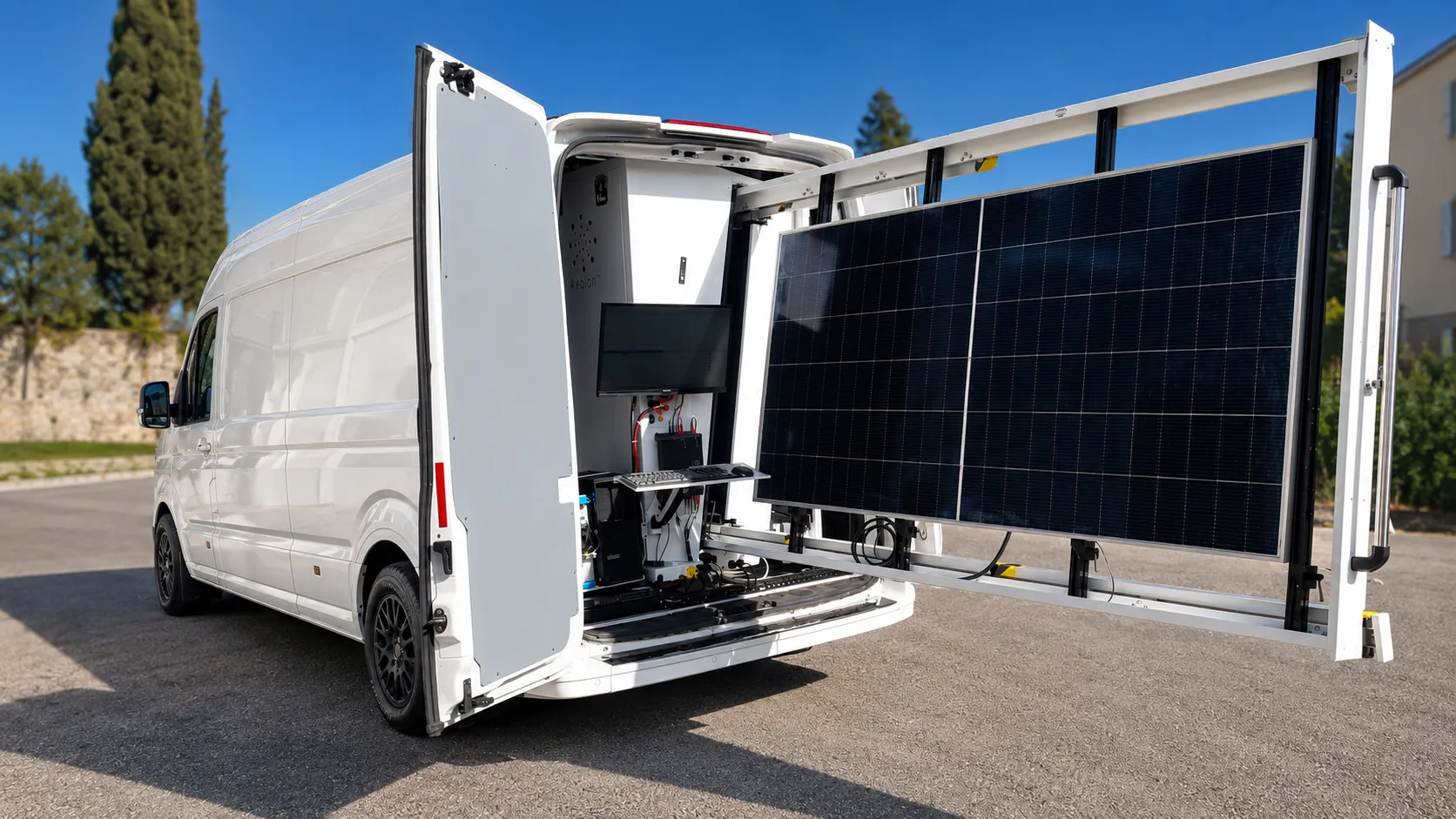
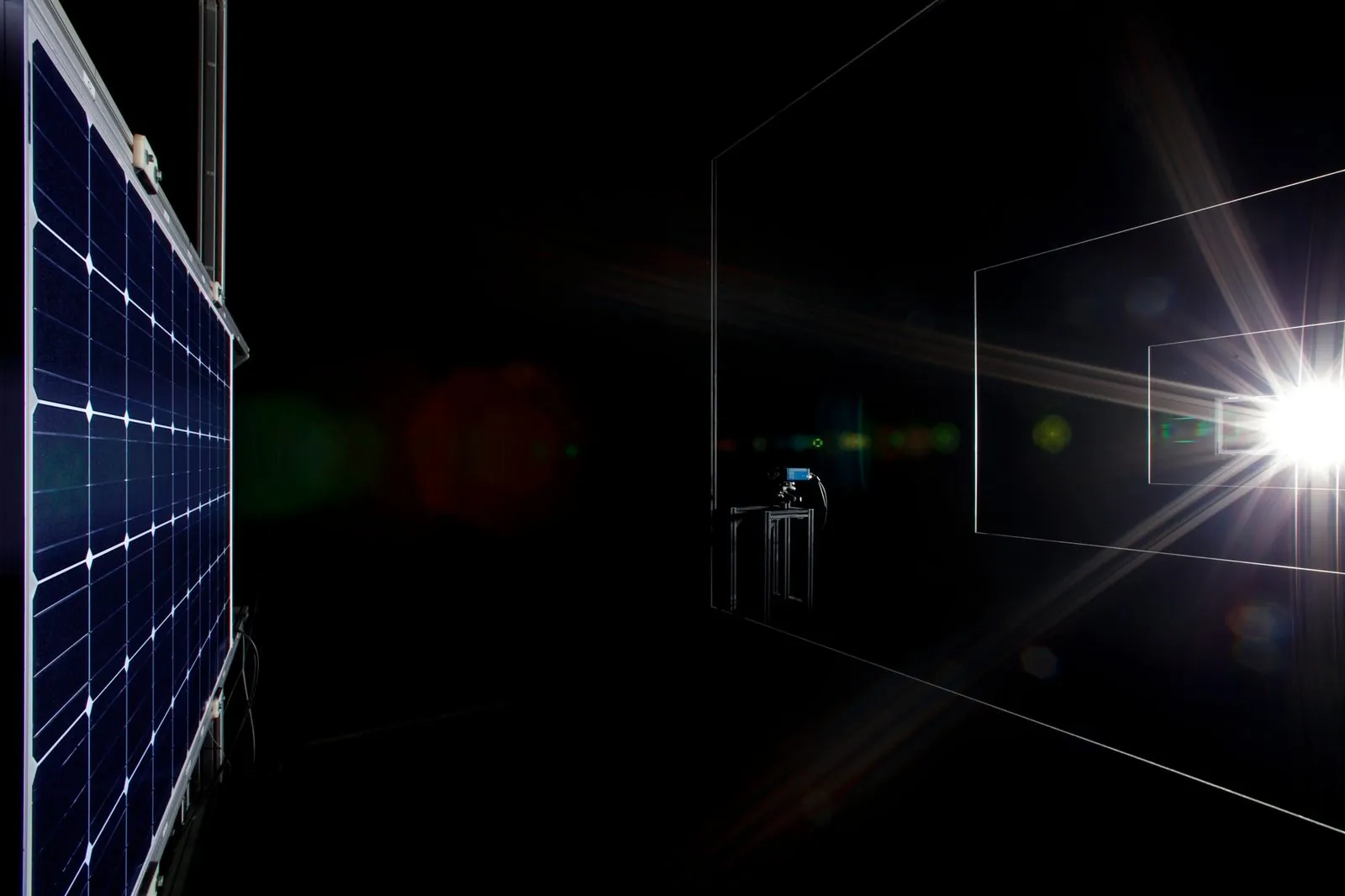
Xenon flash systems deliver high irradiance over large test areas with a long, controllable plateau, and they have four decades of reference heritage behind their spectral and uniformity behaviour. For full-size module rating on the line and in the lab, a long-pulse xenon simulator is a proven, low-uncertainty choice that scales to large modules.
Where LED is strong
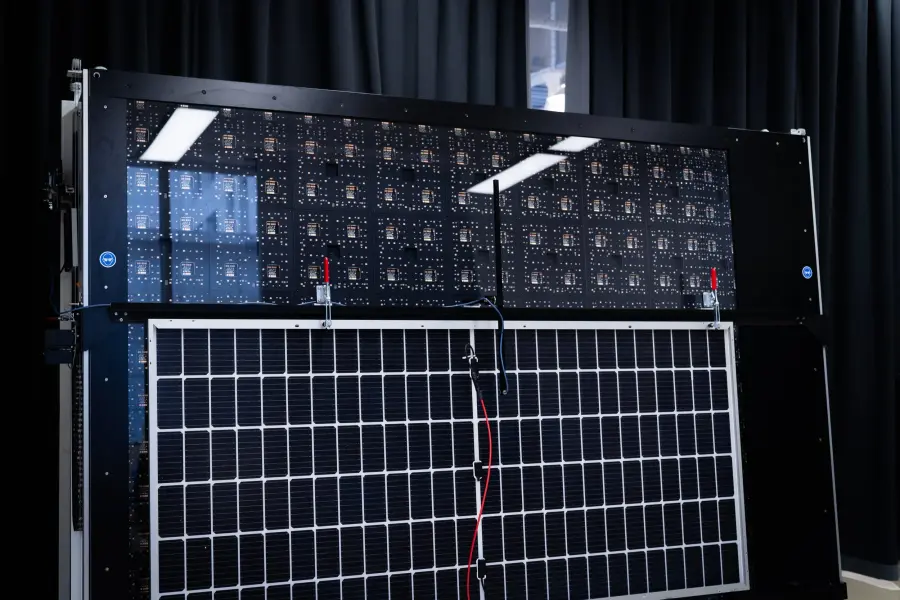
LED simulators allow the spectrum to be shaped actively across many channels, which is useful for spectral tuning and for emerging tandem and perovskite-silicon research where the spectrum matters per junction. Within the wider group, Pasan's sister company Avalon ST builds advanced LED platforms, so the choice between xenon and LED can be made on the measurement need rather than on what one supplier happens to sell.
How to decide
- Confirm the pulse length and plateau stability, this is what governs capacitive-module accuracy.
- Check the IEC 60904-9 class on all three criteria, and the edition of the report.
- Ask for performance data on HJT or TOPCon reference modules, not just on PERC.
- Match the test area to your largest module, and the cycle time to your line.
- Ask for the calibrated uncertainty budget, not only the class label.
Frequently asked questions
- Do I need xenon or LED to measure HJT and TOPCon modules?
- Either can work. The deciding factor is pulse length and stability, because high-capacitance cells need time to settle. A long-pulse simulator with a 40 to 100 ms plateau measures HJT and TOPCon without hysteresis.
- Why does a short flash give the wrong result on high-efficiency cells?
- HJT, TOPCon and similar cells store charge. If the pulse is too short the junction never settles during the sweep, so the I-V curve shows hysteresis and the power rating is inaccurate.
- What pulse length does Pasan use for capacitive modules?
- Pasan's long-pulse xenon platforms hold a 40 to 100 ms plateau and add the DragonBack and SmartSweep methods to measure even the most capacitive technologies without hysteresis.