
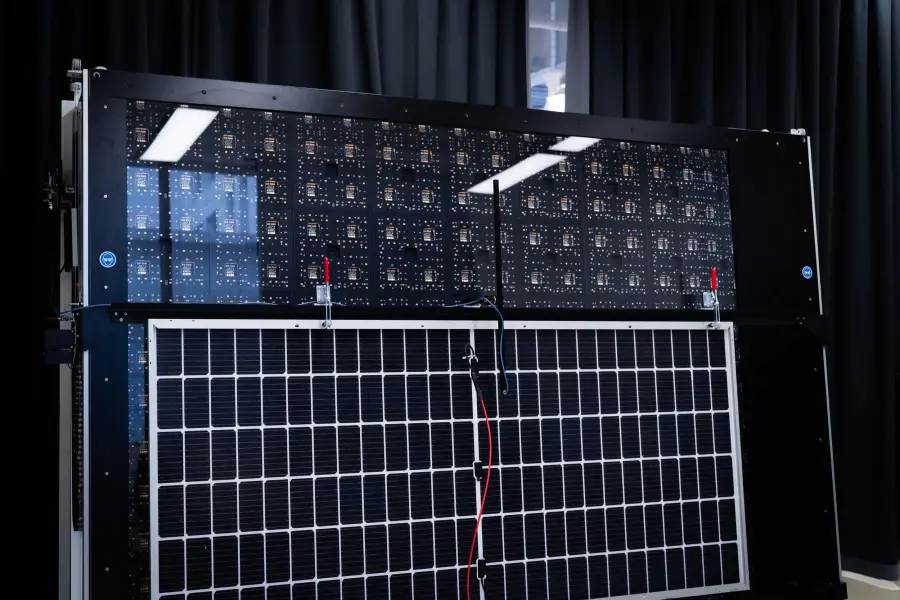
IEC 60904-9 is the standard that classifies the light of a solar simulator. Its third edition, published in 2020, changed how the spectrum is judged. A simulator classified under edition 2 is not automatically the same class under edition 3, so the edition on a classification report matters.
A wider spectral range
Edition 2 assessed the spectrum from 400 to 1100 nm. Edition 3 assesses 300 to 1200 nm, because modern cells respond further into the blue and the near infrared. Light outside the old window now counts, for better or worse.
Six new bands
The range is split into six bands (300 to 470, 470 to 561, 561 to 657, 657 to 772, 772 to 919 and 919 to 1200 nm), each carrying an equal share of the AM1.5G reference irradiance. Spectral match is the ratio of the simulator’s share to the reference share in every band.
The A+ class
Edition 3 added an A+ grade tighter than Class A on all three criteria: spectral match, spatial non-uniformity and temporal instability. Pasan reference systems go further still, to A++, about twice as good as the Class A limits. See IEC 60904-9 explained.
SPC and SPD
Band ratios average over each band, so a simulator can hide a gap or a spike inside a band and still pass. Edition 3 therefore adds two reported figures. Spectral coverage (SPC) is the share of the range where the simulator actually emits a meaningful fraction of the reference. Spectral deviation (SPD) is how far, in total, the simulator spectrum departs from AM1.5G. They sit alongside the class and make two simulators with the same letters comparable.
What it means in practice
- Ask which edition a classification report follows.
- Measure up to 1200 nm: a silicon spectrometer alone does not reach the top of the range.
- Look at SPC and SPD, not only the band ratios.
- Re-check the class on site, on the real measurement flash.
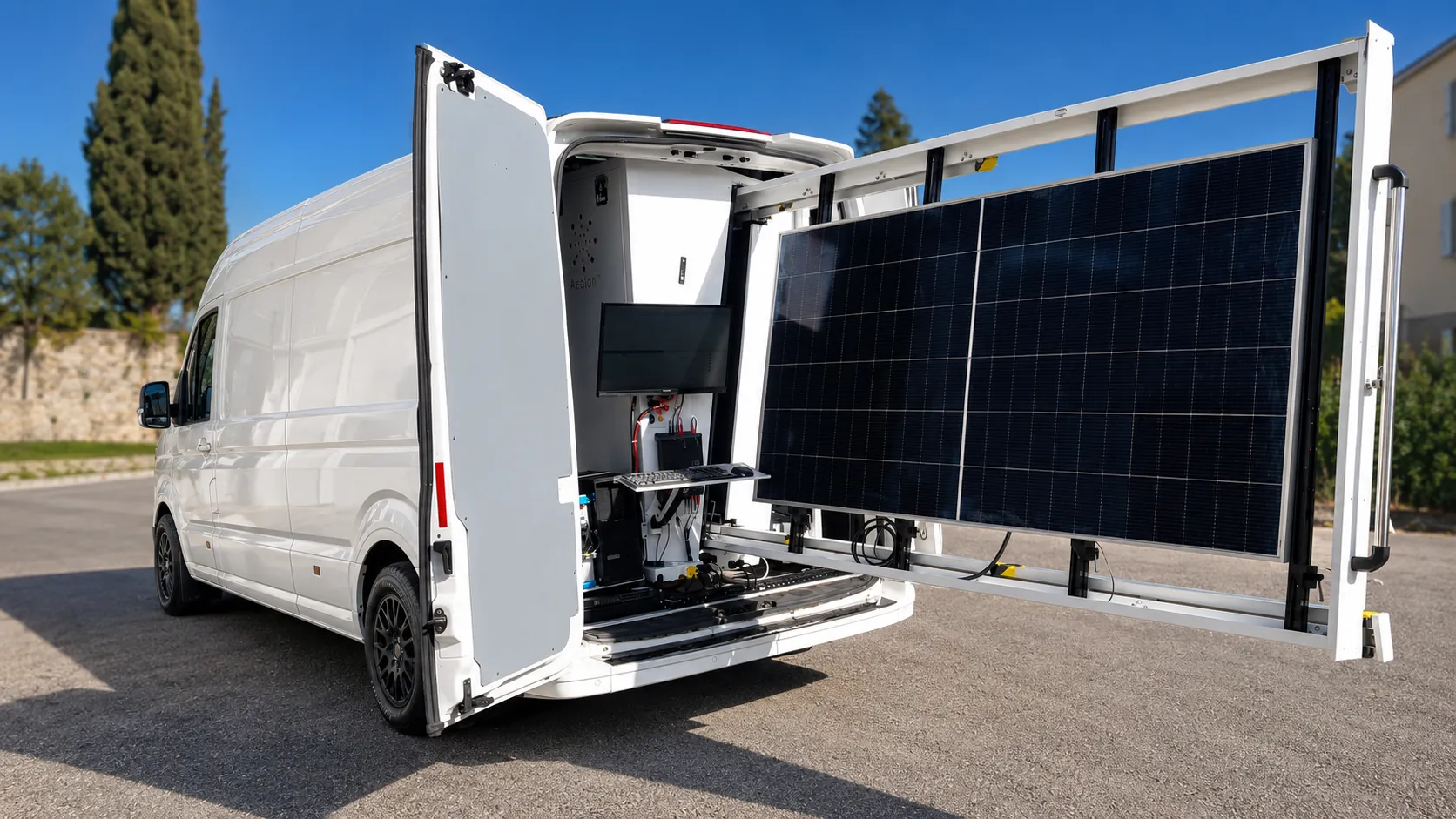
The Spectral Response Kit pairs a silicon and an InGaAs channel to cover 300 to 1200 nm, captures the actual measurement flash and reports band ratios, SPC and SPD.
Frequently asked questions
- What changed in IEC 60904-9 edition 3?
- The 2020 edition widened the spectral range from 400 to 1100 nm to 300 to 1200 nm, split it into six new bands with equal shares of AM1.5G irradiance, added the A+ class, and introduced spectral coverage (SPC) and spectral deviation (SPD).
- What are SPC and SPD in IEC 60904-9?
- Spectral coverage (SPC) is the share of the 300 to 1200 nm range where the simulator emits a meaningful fraction of the reference spectrum. Spectral deviation (SPD) is the total departure of the simulator spectrum from AM1.5G. Both are reported alongside the class.
- Is a simulator classified under edition 2 still valid?
- Its report remains a statement against edition 2. Because edition 3 uses a wider range and different bands, the same simulator can grade differently, so ask which edition a report follows.
- How do I measure a simulator spectrum up to 1200 nm?
- Silicon detectors fall off near 1100 nm, so a second near-infrared (InGaAs) channel is needed. The Pasan Spectral Response Kit combines both and captures the real measurement flash.