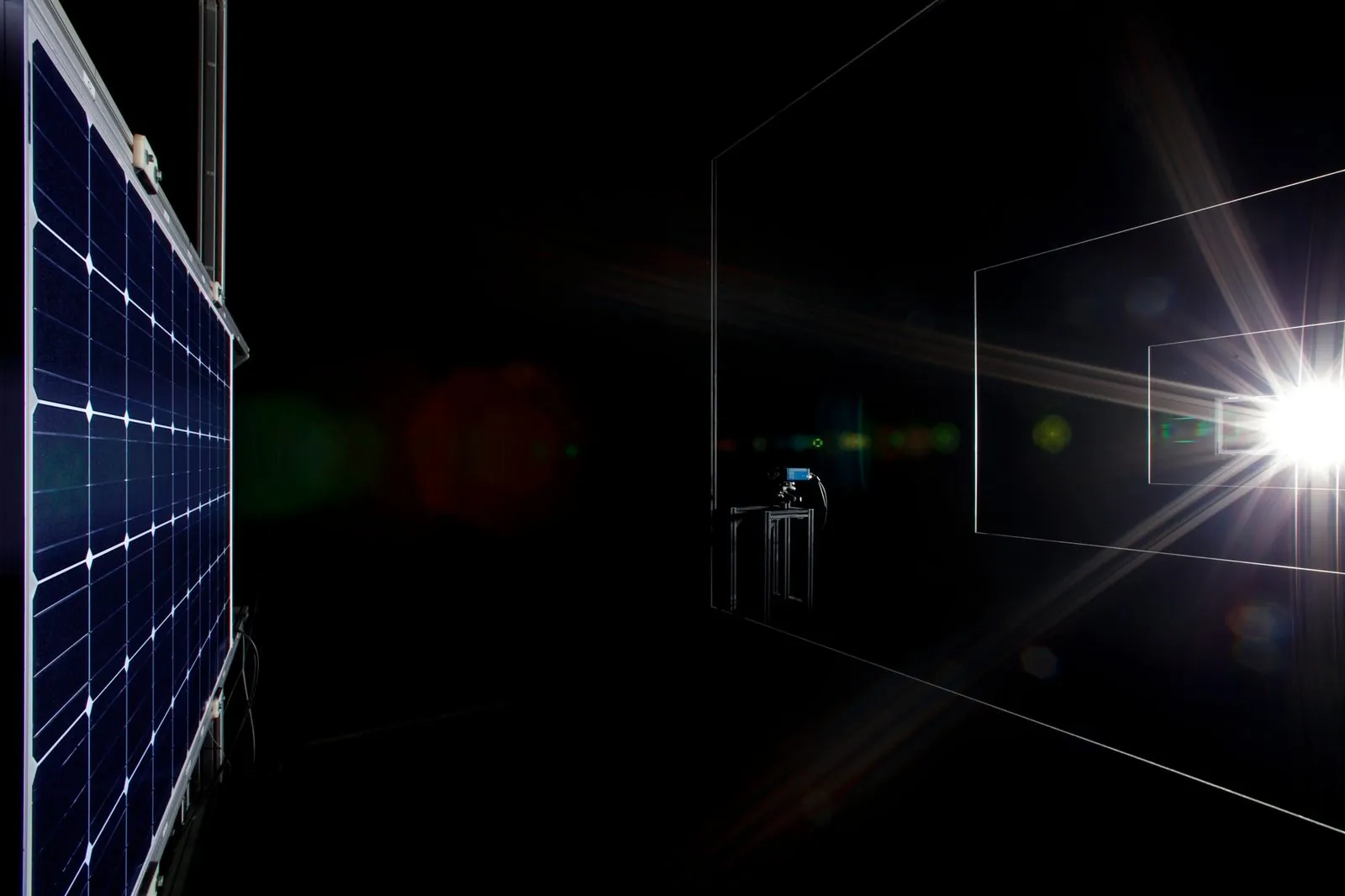

IEC 60904-9 is the international standard that classifies the light a solar simulator produces. It grades three independent properties of the beam, and a class label such as A+A+A+ reports one grade for each, always in the same order: spectral match, then spatial non-uniformity, then temporal instability. A single letter tells you almost nothing; the three together tell you whether a measurement can be trusted.
The three criteria, in order
1. Spectral match
How closely the simulator's spectrum matches the reference AM1.5G sunlight, measured band by band across the wavelengths a solar cell responds to. A poor spectral match forces large spectral-mismatch corrections and adds uncertainty. The Pasan A++ Reference, for example, holds spectral match inside 0.9375 to 1.0625 (within 6.25%), well tighter than the Class A window.
2. Spatial non-uniformity
How evenly the irradiance is spread across the test plane. If one corner of a module sees more light than another, the measured power is wrong. On a reference-class Pasan system spatial non-uniformity is held below 0.5% across the full test area.
3. Temporal instability
How steady the light is during the measurement. Both short-term instability (within a single I-V sweep) and long-term instability (across the flash) are graded. For capacitive modules that need a long pulse, temporal stability over tens of milliseconds is what keeps the I-V curve clean.
Where A+ and A++ come from
The published top grade in IEC 60904-9 is Class A, and, in the 2020 edition, an A+ tier tighter still. The industry then uses A++ as shorthand for performance a defined margin better than the Class A limit on a given criterion. In Pasan's convention an A++ grade is roughly twice as good as the Class A threshold for that property. Because the three criteria are independent, a real datasheet often mixes grades, which is why you see labels like A+A+A+ or A++A++A++ rather than a single number.
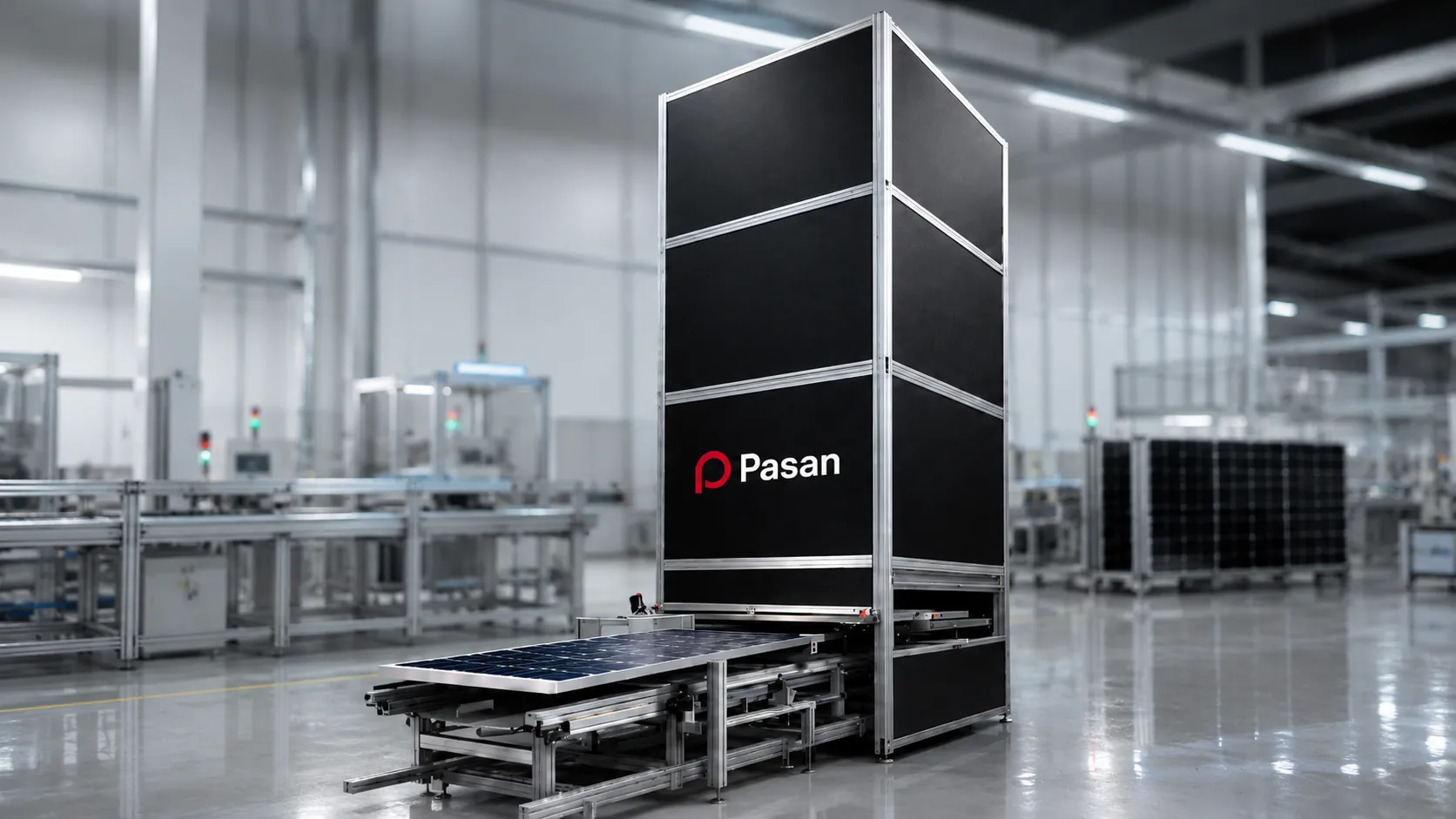
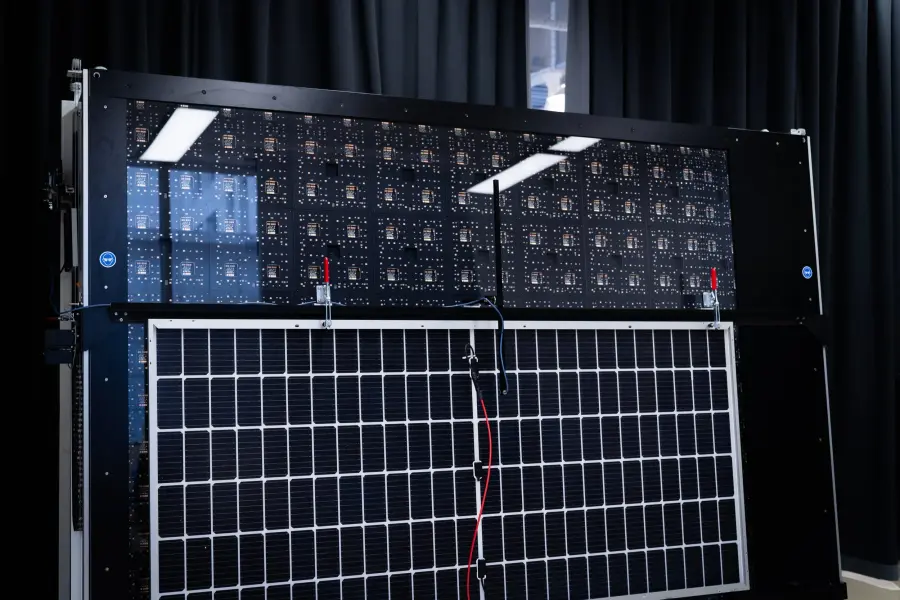
Pasan has a direct hand in that scale. Pasan built the first solar simulator able to reach the A+ level of performance, at a time when no other system could, and that real-world capability helped push the A+ class into the standard itself. Pasan is now testing those limits again, reaching A++ across all three criteria on its reference systems, roughly twice as good as the Class A threshold.
The practical takeaway: read all three positions, and ask which edition of IEC 60904-9 the classification report was issued against. A production flasher and a calibration reference can both be "Class A", yet differ by a large factor in the uncertainty they contribute.
Frequently asked questions
- What are the three IEC 60904-9 classification criteria?
- Spectral match, spatial non-uniformity and temporal instability. A class label such as A+A+A+ gives one grade for each, in that order.
- What does A++A++A++ mean on a solar simulator?
- It means the simulator grades a defined margin better than the Class A limit on all three criteria. In Pasan's convention A++ is roughly twice as good as the Class A threshold for that property. The Pasan HighLIGHT A++ Reference holds this class.
- Is A++ part of the IEC 60904-9 standard?
- The standard publishes up to Class A+ in its 2020 edition. A++ is industry shorthand for performance a defined margin better than the Class A limit. Always check which edition of IEC 60904-9 a classification report was issued against.
- Who first reached the A+ solar simulator class?
- Pasan built the first solar simulator able to reach the A+ level of performance, at a time when no other system could, which helped drive the A+ class into IEC 60904-9. Pasan reference systems now reach A++, roughly twice as good as the Class A threshold across all three criteria.