

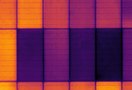
 Electroluminescence Imaging
The measurement problem
Moving all contacts to the rear removes front shading and raises efficiency, but it keeps the long carrier lifetimes that make a device capacitive, and at cell level it moves the contacting problem to a dense rear pattern. Both affect the measured power.
The physics behind it
- High-efficiency back-contact and HIT modules are usually highly capacitive and sensitive to acquisition times below about 200 ms [1].
- Contacting concept, chuck and rear illumination conditions changed measured efficiency of industrial cells by up to 0.5 % absolute [2].
- IBC cells were among the architectures more vulnerable to UV-induced degradation than Al-BSF [3].
What the measurement must achieve
- Quasi-steady-state I-V, verified by forward and reverse sweeps.
- For cells: rear contacting matched to the metallisation pattern, with the measurement conditions documented as calibration laboratories do [2].
- For bifacial variants: dark non-illuminated side per IEC TS 60904-1-2 (modules) or IEC TS 63202-3 (cells).
Applicable standards
| Standard | What it governs here |
|---|---|
| IEC 60904-1:2020Measurement of photovoltaic current-voltage characteristics | I-V measurement and equivalence to steady state for capacitive devices. |
| IEC TS 63202-3:2023Measurement of current-voltage characteristics of bifacial photovoltaic cells | I-V of bifacial cells. |
| IEC TS 60904-1-2:2024Measurement of current-voltage characteristics of bifacial PV devices | I-V of bifacial encapsulated devices. |
| IEC 61215-1-1:2021Special requirements for crystalline silicon modules | Crystalline silicon specific qualification requirements. |
Measurement technologies: advantages and limitations
The capacitive considerations are those of heterojunction devices: long pulses, validated single-pulse methods, multi-flash or steady state. For cell testers with a contacting unit on the rear, double-sided illumination is mechanically constrained, which is where the single-side equivalent-irradiance method of IEC TS 60904-1-2 helps. No IBC-specific comparison of xenon and LED sources was found.
Where Pasan equipment fits
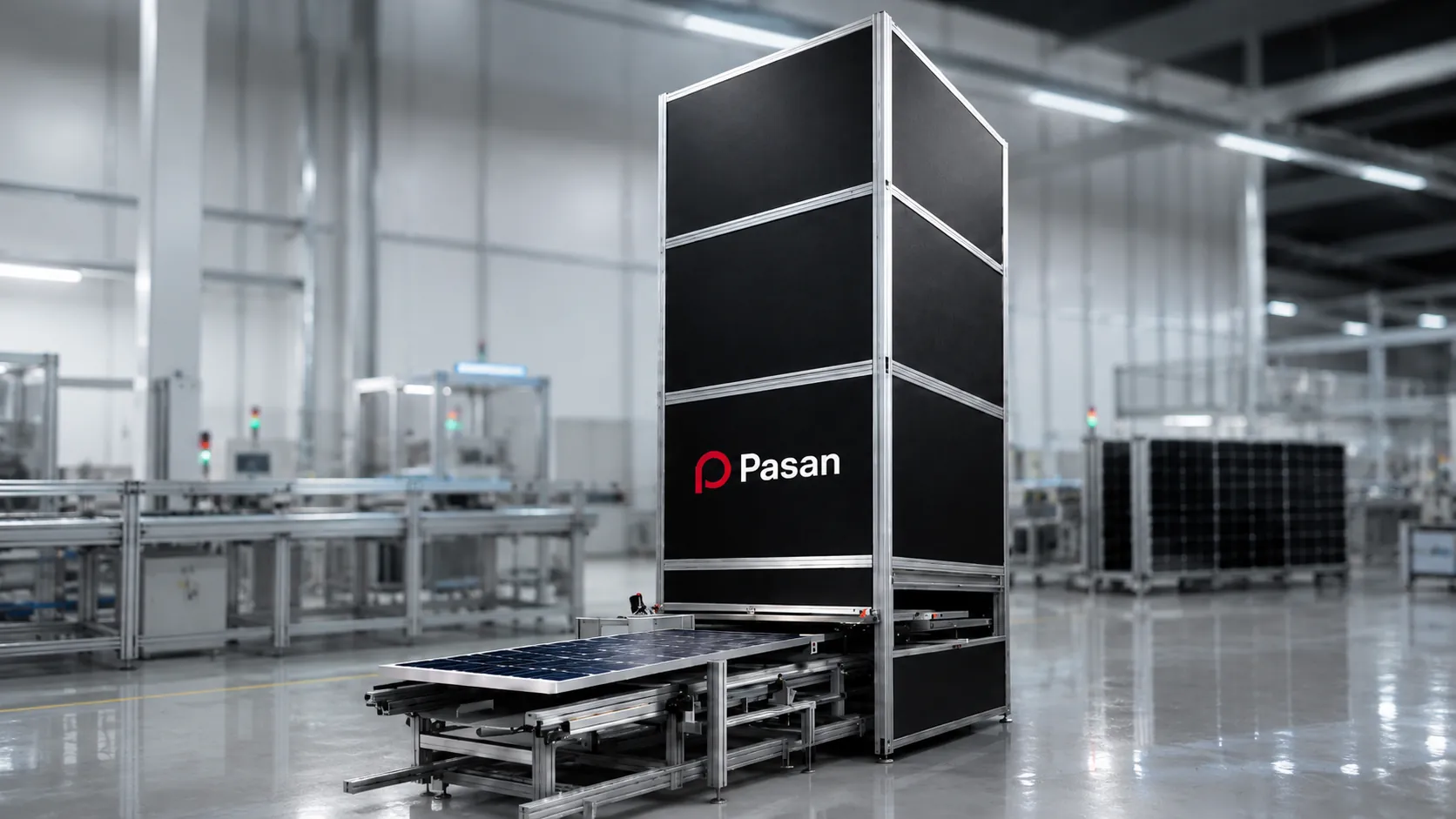
- HighLIGHT 100ms LabLong pulse with DragonBack® and SmartSweep for capacitive modules.
- SpotLIGHT cell testerSingle-cell I-V for capacitive cells.
Technical questions
- Are IBC modules capacitive?
- Yes. The JRC industry guidelines group back-contact with HIT modules as highly capacitive [1].
- How much can contacting change measured cell efficiency?
- Up to 0.5 % absolute between measurement configurations for industrial cells [2].
- Which standard covers bifacial cell I-V?
- IEC TS 63202-3:2023 for unencapsulated bifacial cells; IEC TS 60904-1-2 for encapsulated devices.
References
- , “Guidelines for PV power measurement in industry”, EUR 24359 EN, Publications Office of the European Union, 2010. Source
- , “The impact of measurement conditions on solar cell efficiency”, Solar RRL 8, 2024. doi:10.1002/solr.202300873
- , “UV-induced degradation of high-efficiency silicon PV modules with different cell architectures”, Progress in Photovoltaics 31, 36-51, 2023. doi:10.1002/pip.3606
How this page is written: claims about physics and standards cite published sources, claims about Pasan equipment repeat only what the product pages state, and no other manufacturer is named. Editorial method